










TEU Special Report, Jinja
To understand the argument that has taken over radio stations, pulpits and WhatsApp groups in Kampala for three weeks, it helps to start not in a church, but in a film most Ugandans watched as children on a Sunday afternoon when television was still black and white.
The Wizard of Oz is a simple story about desperation. Dorothy and her friends have problems that feel bigger than they are, and they are told that a great and powerful Wizard lives in a shining city who can fix everything. He can give wisdom to the confused, heart to the hard-hearted, courage to the frightened and a way home to the lost. The road to him is long, and the people who make it are already tired when they arrive.
When they finally enter his palace, they do not see a man at all. They see smoke and fire and hear a huge, thundering voice from behind a veil shouting that he is Oz, the Great and Terrible, and that no one should dare question him. The hall is dark, the voice is loud, and everyone bows because the voice says it is great. They bring gifts because fear is easier than questions.
Then a small dog does what no human dares to do. Toto, who has no title, no collar of ordination, no place on the program, trots to the corner of the hall and pulls back the curtain with his teeth. Behind the curtain is not a wizard. There is an ordinary, sweating old showman from Kansas working levers and microphones, using smoke and mirrors to make himself look ten times bigger than he is.
This story matters for Uganda today not because it calls pastors wizards, but because it is a story about curtains. Every community lives with curtains. A title can be a curtain. A loud sound system can be a curtain. Smoke machines and colored lights can be a curtain. The phrase “do not touch the anointed” can become a curtain when it is used to stop a vulnerable person from asking a simple, honest question.
In Kampala and all other towns and cities in the last three weeks, Toto has been Frank Gashumba.
Who Is Frank Gashumba And What Did He Say?
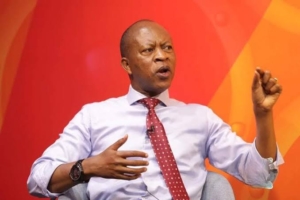
To make sense of the noise, it is important to know the man behind the microphone. Frank Gashumba is not a pastor. He is a businessman, a media commentator and the founder of Sisimuka Uganda. He identifies publicly as a staunch Catholic. He is not a trained theologian. He is a street agitator who says out loud what many Ugandans whisper about in taxis and markets.
According to his own interviews on NBS TV, Sanyuka TV and Facebook, what triggered him was something he saw with his own eyes. A mother whose child was sick had been told on the phone by a pastor to send fifty thousand shillings for anointed olive oil and another hundred thousand as a seed for instant healing. The mother did not have the money.
Out of that anger came three statements now spread across TikTok.
On olive oil, he said pastors buy ordinary olive oil from Shoprite, Carrefour and Capital Shoppers for around fifteen thousand shillings, pour it into small bottles, claim it was imported from Jerusalem and prayed over on Mount Zion for forty days, and sell it for fifty thousand to a hundred thousand. The miracle is not there, but the money is.
On verification, he said if you truly heal, why do you only heal inside your own church where there are no medical files. Come to Mulago National Referral Hospital. I have put five hundred million shillings on the table. Come to the Uganda Cancer Institute and pray for children who have biopsy reports. Pray for people living with HIV who have viral load results. Pray for diabetics who have lab tests. If they are healed instantly, take the money.
On priests versus pastors, he said one Catholic priest is more knowledgeable than a thousand of these pastors because a priest spends seven to twelve years in seminary studying philosophy, theology, history and Latin, while some pastors open a church on Monday and by Thursday are calling themselves Apostle, Prophet and Major One.
Why It Caused Upset And Applause
Unsurprisingly, the reaction was immediate and divided. In many Pentecostal circles the remarks landed as a direct insult. For pastors who believe their anointing comes directly from the Holy Spirit, being told to go to Mulago to prove their gift feels like being told to put God on trial. That is why some responses were curses, with videos showing pastors saying whoever touches the anointed has cursed himself and his future generations.
Yet other Ugandans have pushed back hard against the cursing, saying a pastor like any other human being is not immune to sickness, failure or death, and the core pastoral calling is not to curse but to bless and forgive. If God were to strike down everyone who violates Biblical principles with an instant curse, the streets would be full of confused clergy because none is above reproach.
In other corners there is quiet excitement. Many ordinary Ugandans have watched relatives spend rent money on oil and holy water. They have seen a boda rider who earns twenty thousand a day told to sow a seed of a hundred thousand. For them, Gashumba said what the senga or kooja says when a marriage is failing, that enough is enough.
In medical circles at Mulago and Butabika, doctors have cheered quietly because they have watched patients abandon ARVs, insulin and anti-psychotic medication after being told drugs show lack of faith.
But There Is Another Side That Must Be Told
To be fair to the pulpit, the full picture is more complicated than a single challenge. There are also hundreds of thousands, perhaps millions of Ugandans, including soldiers in uniform, police officers, civil servants, teachers and people in high public office, who will stand behind their pastors and say they have witnessed real miracles in their own lives. They will tell you they went into the prayer room barren and came out with a child. They were bound by alcohol, by depression that felt like eddalu, apoya or lapoya, by violent tempers, and something shifted after a pastor prayed and walked with them for months.
These people are not foolish and they are not all paid actors. Some are generals who have seen war and do not impress easily. Some are nurses who know what a medical file looks like. Their testimonies cannot be dismissed simply because they happened inside a church rather than inside Mulago.
This is why the warning to Gashumba himself matters. If what he is doing is genuinely to protect the poor mother who was asked to pay for oil she cannot afford, many will agree. But if this becomes merely a vehicle to strengthen his own celebrity status, to trend every evening, or merely to edify his Catholic Church while mocking another part of the body of Christ, then the moral ground shifts.
No serious Catholic priest would stand anywhere on a street or on television and shout those things the way it has been done. A serious Catholic priest would simply do his work. He would celebrate Mass, hear confessions, anoint the sick in hospital, teach catechism and leave judgment to God. Truth does not need noise.
And there is a spiritual caution. If this becomes mockery of God’s people for applause, then God will answer. The God who called shepherds knew they were not perfect when he called them. Moses stammered. David committed adultery. Peter denied Jesus. Paul persecuted the church. Yet God used them.
Frank Gashumba Is Not The First
For those who think criticism of shepherds started on TikTok, the Bible has been there first. Anyone familiar with scripture knows criticism of shepherds did not start with Gashumba. If you want stronger language than his, visit the Book of Ezekiel.
In Ezekiel chapter thirty-four, God himself confronts the shepherds in language far more severe than anything said on Kampala radio.
Woe to the shepherds who only take care of themselves, God says. Should not shepherds take care of the flock? You eat the curds, clothe yourselves with the wool and slaughter the choice animals, but you do not take care of the flock. You have not strengthened the weak or healed the sick or bound up the injured. You have not brought back the strays or searched for the lost. You have ruled them harshly and brutally. Then God adds, I am against the shepherds and will hold them accountable.
The same indictment appears in Jeremiah chapter twenty-three and Matthew chapter twenty-three, where Jesus says woe to you teachers of the law and Pharisees, you hypocrites, you shut the door of the kingdom in people’s faces and devour widows’ houses while making lengthy prayers for show.
How Healing Was Understood Before.
Long before Christianity and Islam arrived, healing in Uganda was already a structured profession. Among the Baganda, Banyankole, Basoga, Lango, Acholi and Lugbara there were herbalists known as abasawo be ddagala or abafumu who knew roots, leaves and bark. A child with malaria was given omululuza scientifically called Vernonia amygdaline, a bitter leaf still used today. Every leaf, the elders said, has its work.
Alongside them were spiritual healers, the balubaale, bamandwa or mandwa priests, who dealt with spiritual causes. If herbs failed, the family would say there is something behind this sickness.
What made African healing distinctive was that it never separated body from mind or community. Madness was called eddalu in Luganda, eiraro in Runyankole and apoa or lapoya among the Lango and Acholi.
The herbalist might give calming roots. The spiritual healer might say the person had been seized by a spirit called muzimu or ekijumba. Treatment could involve night-long drumming, singing, confession and seclusion at a shrine. The drum, the dance and the herbs were early forms of psychotherapy.
Epilepsy, known as ensimbu or kwingkwing among the Lango, leprosy, skin disease, persistent coughs and ulcers all had named herbs. Childlessness was painful. A woman who could not bear children was called omugumba, but a young man who lost his mind brought equal grief.
For infertility the family went to the herbalist for herbs such as emirire and entabwa in Ankole and ensugga and namirembe in Buganda. If that failed, they consulted the diviner who might prescribe bathing at sacred places like Sezibwa Falls or Kitagata.
Healing was communal. The clan brought food. For a barren woman, the sengas played the role of counsellor and negotiator. For a person with madness, the clan gathered, sang, beat drums and kept watch through the night. That was community mental health care before the modern term.
When Dr Albert Cook founded Mengo Hospital in 1897, the foundation of Mulago, he found this system fully in place.
What The Bible Teaches About Healing
Against that background, what does scripture actually say? The Bible presents God as Jehovah Rapha, the Lord who heals you. Healing words include shalom, wholeness, restoration, forgiveness and peace. When Jesus healed the paralytic in Mark, he first said your sins are forgiven and only then said rise and walk.
In scripture restoration unfolds in strands that work together. One strand is healing through natural means. The Book of Sirach says honor the physician because the Lord created him and created medicines out of the earth. Luke remained the beloved physician after becoming a Christian. Isaiah applied a fig poultice to Hezekiah. Paul told Timothy to use a little wine for his stomach. This is fully Biblical.
Another strand is healing through miraculous intervention. The Gospels are full of blind eyes opening and tormented minds being set free. These miracles are immediate, public and verifiable. They are never sold. Jesus said freely you have received, freely give.
The third strand, which modern preaching often forgets, is ultimate healing, which is death itself. Paul writes to live is Christ and to die is gain. Revelation promises a final place with no more pain. For the believer, death is not failure of healing. It is final healing. Sometimes God heals the body in this life, sometimes he heals the soul, sometimes he heals by taking his child home.
Paul prayed three times for a thorn to be removed and heard my grace is sufficient for you. Timothy had frequent stomach ailments. Trophimus was left sick at Miletus. If even apostles were not always healed, how can anyone promise everyone who buys oil will be healed.
Health Ministry As A Signed Cheque
This brings us to a misunderstanding that has cost lives. The Ministry of Health, science and Mulago are not enemies of God. They are miracles already signed and waiting to be cashed.
Imagine a father who loves his son and writes a large cheque, signs it and puts it in his pocket. The money is already given, but the son must still walk to the bank and cash it. If he stays at home saying my father loves me but never goes to the bank, he will remain broke, not because the father failed, but because he did not actualize what was provided.
That is what medicine is. God created plants that contain quinine, penicillin and artemisinin. God gave minds ability to discover insulin, ARVs, chemotherapy, antipsychotics and vaccines. Those are signed cheques from God. Doctors and nurses are tellers God placed at the counter to help cash them. To tell a diabetic to throw away insulin for oil is refusing to cash a cheque God has already signed.
Why Mulago Matters And Oil
If medicine is a signed cheque, Mulago is the bank where it is cashed. Seeing is believing, which is why Frank Gashumba chose Mulago. In a church auditorium a claim is hard to verify. Someone says they were blind for ten years, they fall, they get up, they say they can see, the crowd claps and there is no file. At Mulago it is different. Every cancer patient has a biopsy report. Every HIV patient has a viral load. Every diabetic has labs. If someone is healed, there is a before and after doctors can read.
That desire for verification is Biblical. Jesus did not heal in hidden rooms. He healed where people knew the sick person. The man born blind in John was known to his neighborhood. The lame man at the Beautiful Gate in Acts sat there every day for years. John writes test the spirits to see whether they are from God.
At the same time, the Bible warns against turning God into a show. When the devil told Jesus to throw himself from the temple to prove God would save him, Jesus answered do not put the Lord your God to the test. A healing done out of love in a ward is one thing. A healing staged for five hundred million shillings with cameras rolling is another.
If the goal is truth, the better path would be quiet. Let pastors approach Mulago administration, work with the hospital chaplaincy that already exists, ask permission to pray for willing patients without charging and without cameras, and let medical reports speak.
On olive oil, the Bible does mention it. In Mark the disciples anointed many sick people with oil and they were healed. James says if anyone is sick, let them call the elders to pray and anoint them with oil in the name of the Lord, and the prayer offered in faith will make the sick person well. The power is not in the oil. The power is in the prayer. The oil is only a sign. It is not magic.
There is nothing wrong with buying olive oil from Shoprite or Carrefour, praying over it and using it freely. The problem begins when ordinary oil is presented as something it is not, when people are told without buying it they cannot be healed, when a mother at Cancer Institute is told to send mobile money before anyone will pray for her child. God is not for sale.
What Science Says And Money And Curses
Because this debate is now at the door of Mulago, we must ask what science says when prayer is tested like medicine. The most respected summary comes from Cochrane.
In 2009, Roberts, Ahmed and Hall published a Cochrane review of ten randomized trials involving more than seven thousand patients. Overall, they found no clear effect of distant intercessory prayer on death and no significant difference for general condition or re-admission.
Individual trials show a mixed picture. In 1988, cardiologist Randolph Byrd published a study of nearly four hundred patients in a coronary care unit in San Francisco where the prayed-for group needed fewer antibiotics. In 1999, Harris and colleagues reported similar findings.
Then came the largest study, the STEP study published in the American Heart Journal in 2006, involving more than eighteen hundred heart bypass patients at six US hospitals. There was no difference between those prayed for without knowing and those not prayed for. Those who knew they were being prayed for actually had more complications, perhaps from anxiety.
During COVID-19, a trial in Sao Paulo with one hundred and ninety-nine patients found no difference. More recently, studies of proximal prayer, where a person prays with the patient present with consent for a few minutes, have found modest reductions in pain and anxiety.
A broad review in Mayo Clinic Proceedings found religious involvement is often linked to better coping and lower blood pressure, but that link is not proof that distant prayer alone cures organic disease without medicine.
For Uganda the balanced picture is this. There is no consensus that distant prayer alone cures terminal cancer, HIV, diabetes or chronic psychosis without medicine. There is moderate evidence that personal prayer with a patient present reduces distress. And there is strong evidence that medicine works. The wise position is both. Take your ARVs and pray. Take your insulin and pray. Go to Mulago for chemotherapy and pray. Go to Butabika for treatment and pray.
At the bottom is money and curses. The Bible does not condemn wealth. Abraham was wealthy. Job was wealthy. But it condemns wealth from exploiting faith. Peter tells leaders to shepherd not for dishonest gain. Paul warns the love of money is a root of evil. Jesus said freely you have received, freely give.
In Kampala today a mother at Mulago is told to send mobile money before prayer. A food vendor who earns less than twenty thousand a day is told to sow a seed of a hundred thousand. If a church chooses to support its pastor, there is no issue. The worker deserves his wages. If wealth comes from telling the sick to pay before they can be prayed for, that is what prophets called oppression.
Then there is curses. Some pastors have cursed Gashumba and his future generations. The New Testament is clear. Paul writes bless those who persecute you, bless and do not curse. Jesus says bless those who curse you and pray for those who mistreat you. James says out of the same mouth should not come praise and cursing. When Jesus was insulted, he did not curse his executioners’ families. He said Father, forgive them, for they do not know what they are doing. No pastor has Biblical authority to curse generations because he was criticized. A curse to defend personal honor is not prophecy. It is retaliation.
Where This Leaves Us
So where does this leave Uganda? Frank Gashumba has raised a question the prophets themselves raised, and that concern is legitimate. But replacing one generalization with another, that all pastors are fake and all priests are holy, does not help. Answering criticism with curses only deepens the wound.
For the ordinary Ugandan the way forward is steady and practical. Keep going to Mulago. Respect doctors, nurses and researchers because that knowledge is also a gift from God, a signed cheque waiting to be cashed. Keep praying for miracles because God is still the Lord who heals. Do not pay for miracles. If prayer, oil or water is sold as a condition for healing, walk away. Test every claim. A true miracle does not fear medical records. It does not need darkness. It does not point to the wealth of the healer. It points to Christ.
Remember also that even death is healing in Christian theology. Sometimes God heals the body in this life through medicine and prayer at Mulago. Sometimes he heals the mind through treatment and community support. Sometimes he heals by calling his child home, where there will be no more pain, no more chemotherapy, no more psychosis, no more tears. That final healing is not failure. It is ultimate hope.
Uganda does not need to choose between Mulago and the altar. Two hands wash each other. The sick need both the best of medicine and the sincerest of prayers.
What they do not need is exploitation. If any pastor believes he has a gift of healing, let him go quietly to Mulago, work with the hospital chaplaincy, ask for permission, pray for willing patients without charging and without cameras, and let the doctors write what they see. That single act would speak louder than a thousand debates on television and would bring honor to both faith and medicine.
Conclusion: The Elijah Test — And Why Truth Does Not Need A Curtain.
If there is a Biblical precedent for Frank Gashumba’s Shs500m dare, it is not on TikTok. It is on Mount Carmel.
In 1 Kings 18, the prophet Elijah was tired of a nation torn between two opinions. On one side were the prophets of Baal, 450 of them, well-fed at the king’s table, loud, confident, draped in titles and backed by the state. On the other side was one rough, unpopular man from the wilderness who had no PR team, no sound system, and no offering basket.
Elijah did not call for a debate. He called for a test. “Bring two bulls,” he said. “You call on your god, I will call on my God. The God who answers by fire, He is God.” It was risky. It was public. It could have ended his life. The prophets of Baal shouted from morning till evening, cut themselves, worked the crowd, and nothing happened. No fire. No healing. No answer. Just exhaustion.
Then Elijah did something simple. He rebuilt a broken altar with twelve ordinary stones, laid the wood in order, poured water three times — not oil, not imported water from Jerusalem at 100k a bottle, just water — and prayed a short, quiet prayer. And fire fell.
That is the lesson for both sides today.
If Frank Gashumba is riding on a funny and risky plane in poor mechanical condition — a plane built out of populism, anger, Catholic pride, and a hunger to trend — then that plane will crash on its own. You do not need to curse the pilot. Gravity will do its work. God does not need pastors to defend Him with curses to the third and fourth generation.
If Gashumba’s motive is not pure, if this is about clout and not about the poor mother told to send Mobile Money before her child is prayed for, then truth will expose him. Time always pulls the curtain. Every Wizard is eventually found to be just a man behind levers.
But the pulpit must hear the other half of the Carmel lesson.
Elijah’s contest ended Baal’s monopoly. The people who had been told not to question, not to test, not to ask for evidence, saw with their own eyes. They fell on their faces and said, “The Lord, He is God.” The era of smoke and mirrors was over.
The world has changed. Uganda has changed. A believer who earns 20k a day on a boda now has a smartphone. She can Google the price of olive oil at Shoprite while you are still preaching that it came from Mount Zion. A patient at Mulago now has a file with a biopsy number that can be verified at the Cancer Institute. A son who watched his mother sell her mattress for anointing oil now has a voice on Sanyuka TV.
Gone are the days of hiding behind theological jargon. “Do not touch the anointed,” “You are too carnal to understand spiritual things,” “Give and it shall be given unto you” — these phrases can no longer be used as curtains to block accountability. The congregation now knows how to search for Matthew 5:44 — “Bless those who curse you” — faster than the pastor can pronounce a curse.
Mulago is not an enemy of the altar. It is modern-day Carmel. It is the place where claims meet files. Where smoke meets laboratory results. If healing is real, it should not fear a lab report. A true miracle has never been afraid of verification. The blind man in John 9 was known by his neighbors. The lame man at the Beautiful Gate in Acts 3 had sat there for years. Everyone knew him.
So let both sides come down from their high places.
If Gashumba is wrong, do not curse him. Let truth shame him quietly. If the gift of healing is true, do not curse critics. Prove it without charging, without cameras, without selling oil. Go quietly to Mulago, work with the hospital chaplaincy that is already there, ask for permission, pray for willing patients, and let the doctors write what they see.
At Carmel, fire answered — not noise. In this generation, Ugandans are no longer asking for noise. They are asking for fire that can be seen, tested, and that leaves the poor mother with her money still in her pocket and her child still able to get treatment. That is the God who still answers.