


There is an old saying among our people that a single bracelet does not jingle, and another that one finger cannot lift a pot from the fire or one stone cannot hold a pot to cook but 3.
Our ancestors who trekked from Abyssinia, now modern-day Ethiopia, down into Lango-the heart of Uganda, could not have survived without understanding this law.
They understood, long before modern political science, that human beings were not designed for solitude in matters that matter. Their journey was not a walk, it was centuries of movement through disease, famine, endless wars with other migrating groups, internal strife, treacherous water bodies and wild animals that showed no mercy.
In that migration, no family or clan survived alone, no elder and no warrior fought alone. The sick had to be carried and treated, the weak had to be guarded, the dead were buried and decisions had to be made collectively around fire at night. It was in that furnace that they learned the hardest truth of human existence that the hand alone cannot open its own back.
From that kind of life and experience, they forged Cingi Keni Pe Pedo Ngunyi, which some modern people fear saying the whole phrase because they mistakenly think its crude and primitive, yet this was and remains not only as a mere saying but a survival code.
Yet today in Lango, we are acting as if we were because everything has been radicalized. Every disagreement has become a war, and every leader, from the elder under the tree to the village catechist, clan leader to pastor and bishop, the LC5 chairperson, Member of Parliament, and the professor in the university, has been dragged, abused, and made into content for radio talk shows, TikTok, and WhatsApp groups.
We have cultivated a culture of searching for the weak points in one another, and the quarrels that once belonged to the trading center have now climbed into universities and even into churches.
It is in this season of divisionism that our ancestors’ wisdom cries out to us with urgency. They left us a totem in Amuka, the rhinoceros, and they left us a law in one uncompromising proverb: “Cingi Keni Pe Pedo Ngunyi.” We must internalize it, and we must understand it, not as a crude joke, but as a philosophy of survival.
The Anatomical Foundation: The Body Itself Teaches Interdependence.
The Lango did not invent this proverb in the air, but they drew it from biology.
First, the limited range of motion of the human arm. Anatomically, the shoulder, elbow, and length of the arm make it impossible for one hand to properly reach and clean the back and perianal area while seated. The body was designed with places you cannot reach yourself.
Second, the anterior placement of human eyes. Our eyes are set in front for hunting and depth, but this means we have a complete blind spot behind us. We cannot see our own back, and therefore we cannot correct what we cannot see.
Third, the biological need for two hands or assistance for proper function. From infancy to old age to sickness, dignity in basic hygiene requires another hand.
From these three observations, the ancestors concluded a law: If your own body has parts you cannot manage alone, then your life, your leadership, and your community also cannot be managed alone. That is the biological root of “Cingi Keni Pe Pedo Ngunyi.”
Because Power Without Community Is A House Built On Sand.
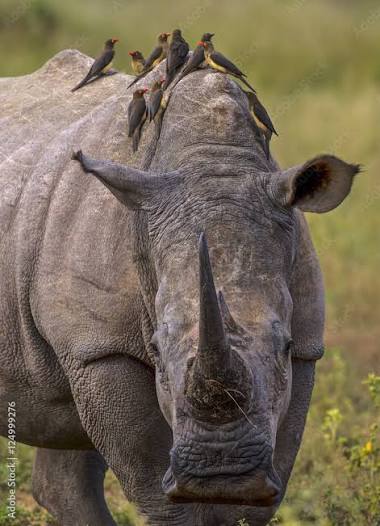
The rhinoceros, Amuka, is called the Chief Magistrate of the jungle because to it the smaller animals run when they are threatened. Amuka teaches that power must not provoke, that it must defend when attacked, and that like a just judge it must know when to stop the pursuit and allow forgiveness to take its place.
However, even Amuka has a limitation that no amount of strength can overcome.
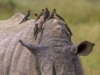
The rhinoceros cannot remove the ticks from its own back, and it cannot see the danger approaching from behind. In the same way, no human being, no matter how titled or wealthy, can govern, correct, or protect himself entirely alone.
The Greek philosopher Aristotle (384-322 BC) who was the student of Plato, observed centuries ago that man is by nature a political animal, meaning that to be cut off from community is to be either a beast or a god. We are neither. To internalize “Cingi Keni Pe Pedo Ngunyi” is therefore to accept early, and with humility, that we all carry places on our backs that we cannot reach, and that wisdom begins with the admission of that limitation.
The 3 Prides That Blind Us:Economic, Religious And Social Forms.
The proverb is a direct confrontation with the three prides that are currently eating away at the fabric of our society.
In our economic life, we have developed the pride that says I have money, therefore I need no one. Yet money cannot mop its own floor, and money cannot clean its own toilet.
We do not wash our cars with white linen bed sheets or with woolen blankets, but with rags, and we despise the very people who resemble those rags.
We look down upon the man who digs the graves, pit latrines, the man who pushes a wheelbarrow, the one who trims the hedges of fences or cut grass in our compounds or the woman or man who cleans the toilets in offices and hotels and the seemingly idle men who push our car when it is stuck in the mud, forgetting the ancient truth that the hand that rocks the cradle rules the world.
In our religious and spiritual life, we have developed the pride that says I am anointed; therefore, I cannot be corrected. I am a born-again believer cannot mix with carnal people.
But even the Bible reminds us that as iron sharpens iron, so one person sharpens another, and our elders used to say that a child who is not corrected by the community will be corrected by the world.
In our social life, we have developed the pride that says I am educated, I am connected, what can this person teach me. Yet it is often the person in torn clothes, the one we dismiss as a rag, who sees the tick on our back that we cannot see.
Some African tribal groups have a proverb that says a child who washes his hands well will eat with elders, and we must learn that dignity is not in the clothes but in the function.
Because Divisionism Feeds Where Humility Has Starved.
Quarrels thrive where people believe they can do everything alone. When we believe we can lead alone, preach alone, and build institutions alone, then every correction sounds like an attack, and every warning sounds like politics.
But “Cingi Keni Pe Pedo Ngunyi” teaches us the ecology of mutualism, just as the oxpecker teaches the rhinoceros. The bird does not exploit the host; it serves it by removing parasites and by sounding the alarm.
To internalize this proverb is to stop treating criticism as an enemy and to start treating it as sanitation. It is to stop seeing the so-called small person as useless and to start seeing them as necessary, because as our grandmothers said, the broom that sweeps the compound may be old, but without it the dust will choke you.
Why Many Lango Now Feel Shy To Speak Serious Things In Leb Lango.
There is a painful contradiction among us today. A Lango man or woman will comfortably say “buttocks”, “menstruation”, “sexual health” or even insult someone in English on radio and in public. But the moment you ask them to say the same thing in Leb Lango, they laugh, they lower their voice, or they say “ole Leblango dong pwod rucu wia”
Why has it come to this?
School And Church Taught Us That English Is “Clean” And Leb Lango Is “Village”
From the time of mission schools, children were punished for speaking Leb Lango in class. English was the language of the teacher, the priest, the hospital and the court. Leb Lango was pushed to the otedero me calo and to the amel or wiitim, for grazing cattle.
So our minds were trained: If it is serious, say it in English. If it is Leb Lango, it must be for jokes or insults and for the uneducated. That is why even today as some health workers will explain in English and fear to use the proper Leb Lango term.
We Lost The Respectful Words And Kept Only The Slang.
Our ancestors were not shy. By the wang oo or wii otem they taught about the body, marriage, birth and death using proverbs and clean Leb Lango. That is how they gave us “Cingi Keni Pe Pedo Ngunyi” without shame, because the lesson was more important than embarrassment.
But today we no longer teach those proverbs to children. So, the only Leb Lango words young people know for sensitive things are the crude, laughing versions from the trading center. With no respectful vocabulary left, we run to English because it sounds “neutral”.
Fear Of Judgment from Our Own People.
When you say a sensitive word in English in Oyam town,Apac town or Dokolo and Lira City, no one claims you. But say it in Leb Lango in a taxi or at a funeral and your auntie, your elder, or your clansman is listening. Immediately the comment comes: “wot angadi or nyak angadi dong pwony oreme me atteteni”, loosely meaning so and so’s son or daughter has no manners at all.
English gives distance. Leb Lango feels personal, and so we hide behind English to avoid being judged by our own.
Our Leaders and Media Have Abandoned The Language.
It is now almost impossible for a Lango man or woman holding key public positions to complete even one full sentence in Leb Lango. In social functions like funerals or marriages, and meetings, within one minute more than 80 percent has shifted to English.
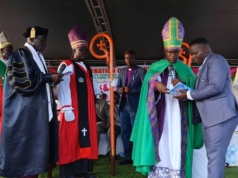
The problem is deeper among our spiritual leaders. Church teachers, Reverends, Rev.Frs, Pastors, Sheikhs, Imams, Bishops and Khadis now preach, counsel and pray in English with a few Lango words added. Yet the grandmothers in the last pew who built the church with bricks and sweat do not understand half of the sermon.
The worst case is our radio stations. Broadcasters in Lango, the very people listeners should learn proper speech and culture from, now feel more proud presenting in English. News, talk shows, even greetings to callers are done in English. The farmer in Okwongodul, Alibi or Baromele and Apokmitimogo, the market woman in Cuk Anekapiri, and the elder in Otuke are listening to learn about home, but they are being taught that Leb Lango is not fit for serious matters.
The Danger.
This is how a language dies, not with a ban, but with shame. When we cannot discuss health, law, governance, or the gospel in Leb Lango, we raise children who are fluent abroad but mute at home. We will end up with a generation that knows the world in English but does not know tic,kwer, kaka, and wiir,anyaka,anyira,awobi,awobe in their own language.
Conclusion: Internalize the Proverb, Or the Ticks Will Consume Us.
The message is therefore simple and urgent. To internalize “Cingi Keni Pe Pedo Ngunyi” is to practice three disciplines at once.
First, humility, which is the courage to admit that there are places on our backs we cannot reach. Second, hospitality, which is the wisdom to keep the oxpeckers close, to value the people who do the dirty work, to listen to the voice from below, and to remember that a roof that despises the pole will fall.
Third, restraint, which is to be Amuka: do not start the fight, defend when you must, and when the one you are pursuing changes direction, stop, forgive, and return to grazing.
If we refuse to understand this, we will remain a people of strong rhinoceroses dying of parasites, with universities full of noise but empty of wisdom, and churches full of shouting but empty of peace and streets full of people but with cobweb minds with bungalows and skyscrapers but devoid of love, peace and wisdom.
But if we internalize it, we will recover the Lango way, which is strength without arrogance, and community without dependency.
For as the elders said, even the biggest tree needs the small birds to pick insects from its branches, and even Amuka, the Chief Magistrate of the jungle, cannot survive without a bird.
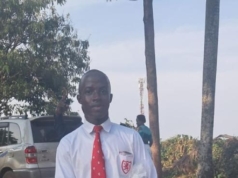
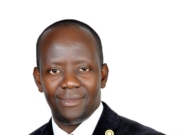
Rev Nelly Nelsons Otto is a senior Anglican priest/veteran journalist and an elder who writes on various topics like culture, governance, religions, environments and African philosophy.