




While the Ministry of Local Government under Hon Balaam Barugahara and Hon Justine Nameere are on rampage against corruption in districts under the Kisanja Hakuna Kulala slogan, the Office of the President is now demanding the same fire from its own heads in the countryside.
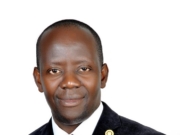
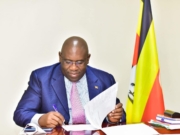
The Secretary and PS in the Office of the President Hajji Yunus Kakande has warned the RDCs to abandon arrogance and absenteeism and instead adopt Kisanja Hakuna Mchezo slogan this 2026-31 term.
Hajji Yusuf Kakande put Resident District Commissioners in Busoga sub-region on final notice: restore discipline, respect hierarchy, embrace teamwork, and deliver measurable results, or be held personally accountable.
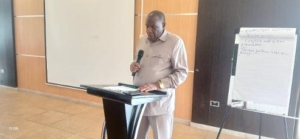
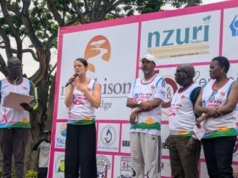
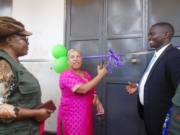
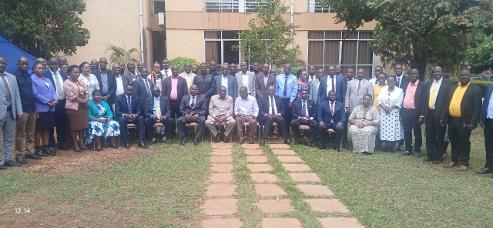
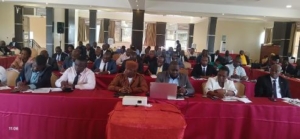
Speaking at the opening ceremony of a 3-day residential workshop at Source of the Nile Hotel Jinja, the Secretary and Permanent Secretary in the Office of the President, Hajji Yusuf Kakande, told RDCs, Deputy RDCs, Assistant RDCs, RISOs and DISOs that the era of absenteeism, arrogance and “I am connected” attitudes is over.
“The President has given you authority not for personal aggrandizement, but to serve Ugandans and deliver on the NRM manifesto,” Kakande said. “That authority comes with responsibility. Misuse it and you will answer.”
Busoga: 11 Districts + Jinja City Under Review.
Busoga sub-region, one of Uganda’s most populous, is made up of 11 districts and Jinja City. The districts are: Bugiri, Bugweri, Buyende, Iganga, Jinja, Kaliro, Kamuli, Luuka, Mayuge, Namayingo and Namutumba.
With a youthful population of over 4.5 million people, Busoga is central to government’s agenda on jobs, wealth creation and industrialization. Kakande said the workshop was convened to realign the RDC structure to deliver on that agenda.
Also in attendance were officials from the Internal Security Organization (ISO).
ISO is Uganda’s domestic intelligence agency. Its mandate is to collect, analyze and advise government on internal threats to national security. These include terrorism, corruption, political violence, subversion, and anything that threatens stability inside the country.
Security experts describe ISO as the “eyes and ears” of government. It is headed by a Director General based at headquarters in Kampala.
At regional level, the RISO – Regional Internal Security Officer supervises all DISOs in the region, consolidates district intelligence reports, and transmits regional security briefs to ISO Headquarters and the RDC Secretariat.
The DISO – District Internal Security Officer is technically an ISO officer, but administratively works under and reports to the RDC in the district. The RDC chairs the District Security Committee, while the DISO serves as secretary and chief intelligence advisor.
“Authority Must Be Exercised With Restraint, Integrity And Humility”
Opening his address, Kakande reminded the officers that the Office of the President represents the highest office in the land.
“The authority associated with the Office of the President is considerable and must always be exercised with restraint, integrity, discipline and responsibility,” he said. “You are entrusted with public authority to serve the people and advance the interests of government, not for personal benefit.”
He warned against three specific vices: using office to intimidate citizens, using office to settle personal scores, and using office to interfere in administrative or technical processes.
“Citizens expect government representatives to be fair, accessible, professional and responsive,” he said. “The moment you become rude, corrupt, or arrogant, you break that trust. And once trust is broken, service delivery collapses.”
On resources, he was blunt: “Remember that the vehicles, the offices, the budgets you oversee do not belong to you. They belong to the people of Uganda. Manage them as a trustee, not as an owner.”
Teamwork And Respect For Hierarchy: The Non-Negotiables.
The PS devoted the largest section of his speech to teamwork and discipline, saying these are the biggest gaps undermining government performance in Busoga.
“I expect a strong culture of teamwork, discipline and performance, government cannot deliver results when officers work in isolation, undermine one another, compete for credit, or neglect their responsibilities. This is Kisanja Hakuna Mchezo”,he stressed.
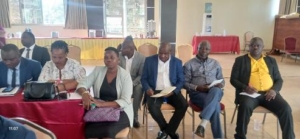
He listed what he expects: punctuality, commitment, professionalism, responsiveness, and accountability.
“Absenteeism and neglect of duty must not become the culture of our offices. If you are not in office, who is representing the President? If you are not monitoring PDM, who will ensure the money reaches the right groups?”
Kakande called out a growing tendency of some officers to claim they are untouchable because of perceived connections to powerful people in Kampala.
“Do not bypass your superiors, undermine colleagues, or interfere in matters outside your authority,” he said. “Understand your mandate and respect the mandates of other institutions — the CAO, the RDC, the LC5, the police, the technical staff. Where disagreements arise, use the proper channels to resolve them professionally and constructively.”
Why Hierarchy And Discipline Are The Backbone Of Government.
Drawing from 40 years of experience in public service, Kakande gave RDCs a civics lesson on why structure matters.
On Hierarchy: “Hierarchy is simply the chain of command — who reports to who, who approves what, and who is accountable. It brings order. When something goes wrong, we know which office to ask. When something works, we know who delivered. Without it there is confusion and blame-shifting.”
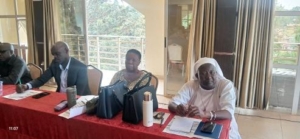
He said hierarchy also ensures efficiency. “Government is too big for everyone to call State House directly. Information and decisions must flow through the right channels so that work is coordinated and there is no duplication.”
It also protects institutions. “The Office of the President, the Ministry, the District and the Sub-County each have a mandate. Respecting hierarchy means respecting those mandates. Bypassing a superior or interfering in another office only creates conflict and weakens the system.”
Finally, hierarchy ensures continuity. “Governments outlast individuals. Because work is tracked through the system, files and decisions do not die with one officer.”
On Discipline: “Discipline is doing the right thing even when no one is watching. In civil service it means punctuality, integrity, respect, accountability and commitment to duty.”
He explained why it matters. First, discipline protects public trust. “Citizens give you power and resources. The moment an officer is rude, absent, corrupt or arrogant, that trust is broken.”
Second, discipline delivers results. “Programs like PDM, UPE, USE and Emyooga only succeed when officers show up, monitor and follow up. Absenteeism and the ‘I am connected’ attitude kill service delivery.”
Third, discipline protects public resources. “A disciplined officer safeguards vehicles, offices and budgets. An undisciplined one treats them as personal property.”
Fourth, discipline builds teamwork. “One undisciplined officer can destroy the morale of an entire office.”
He concluded: “From my 40 years, I have seen very qualified officers fail because of lack of discipline. Others who were average but disciplined rose to the top. Paper qualifications open the door. Discipline and character keep you in the room and help you rise.”
“No One Has A Formula For Everything”: The Case For Teamwork.
Kakande said the single biggest threat to service delivery is arrogance — the belief by some officers that they can work alone and solve all problems.
“No single person can claim to have an instant formula to the world’s issues and problems,” he said. “Government work is not done by one person. It is done by teams. When you isolate yourself, when you refuse to share information, when you undermine colleagues, you undermine the presidency itself.”
To drive the point home, he cited a recent international example.
“Look at what happened recently. There was arrogance and a mistaken belief that if you attack Iran, the war will last four weeks and the Iranian citizens will rise against their leadership and the government will collapse,” he said, in an apparent reference to actions by the United States and Israel.
“The war has not ended. The intended objectives have not been achieved. And now you see someone at the White House speaking in tongues, posting messages and deleting them. That is what happens when you act on arrogance instead of strategy, consultation and patience.”
He told RDCs to learn from that mistake.
“Our work is with people. You cannot force a farmer to embrace commercial agriculture by shouting. You cannot force a youth to join PDM by threats. You must mobilize, explain, consult, and work as a team with local leaders, security and technical staff. That is how lasting results are achieved. Teamwork turns resistance into cooperation.”
The Core Mandate: Turn Busoga’s Population Into Wealth.
After addressing conduct, Kakande shifted to performance. He said the President’s expectation of Busoga RDCs is clear: transform the population into productive human capital.
“Your task as representatives of the presidency in your respective districts is to help turn Busoga’s growing population into productive human capital,” he said.
He broke that down into 5 priority areas:
Youth Employment and Skills: “Link young people to skilling centers, apprenticeships, and the Emyooga and PDM money. An idle youth is a danger to himself and the community.”
Commercial Agriculture: “Move people from subsistence to commercial production. Busoga has land, water and climate. We must add value to sugarcane, maize, cassava, fruits and dairy.”
Market Access: “Work with UNRA, URC and local governments to ensure farmers can take produce to market. Bad roads kill profits.”
Value Addition: “No more selling raw materials. We need factories in Jinja, Kamuli, Iganga. That is where jobs are.”
Utilizing Strategic Location: “Busoga sits on Lake Victoria, borders Kenya and Tanzania, and is near Kampala. Use that for trade, tourism, and industry.”
“The goal is to increase household incomes, create jobs, and accelerate sustainable economic transformation in the sub-region,” Kakande said. “That is what citizens will judge you by in 2026, not how many people you shouted at.”
He warned that failure to engage youth constructively has consequences. “Left idle, the same demographic becomes vulnerable to drug abuse, criminality and anti-social behavior that undermine the stability we have worked for.”
Peace And Security: The Foundation For Development.
Kakande told DISOs and RISOs that intelligence is the first line of defense for development.
“There can be no meaningful socio-economic transformation without peace and security,” he said. “Busoga’s growing and youthful population presents tremendous opportunities, but it also requires responsible leadership, vigilance and continuous engagement.”
To DISOs, he demanded accurate, timely and factual intelligence. “Do not politicize your reports. Tell us what is really happening on the ground.”
To RDCs, he said: “Ensure that all security structures in your districts — police, ISO, UPDF, prisons — work together effectively. Emerging threats must be dealt with before they escalate.”
He also reminded officers that with the recent period of intense political activity now behind, the focus must return fully to service delivery.
“Whatever our individual political affiliations or views, the responsibility of government officers is clear: maintain peace, protect life and property, uphold the law and support citizens to return fully to productive economic and social activity.”
Why An Informed RDC Matters.
Kakande took time to explain the broader mission of the Office of the President so that officers understand the weight of their role.
“The mission of the Office of the President is to coordinate government programs, ensure policy implementation, maintain national unity, and guarantee that public resources deliver services to the people,” he said. “The vision is a peaceful, prosperous and transformed Uganda where every citizen benefits from government programs.”
He said the RDC is the most important link in that chain.
“An RDC is the direct link between State House and the village. When an RDC is informed and understands programs like PDM, Emyooga, UPE and USE, projects move, money is not wasted, and citizens get services. When an RDC is uninformed, government becomes a rumor. Citizens start saying ‘government has forgotten us’ simply because the RDC never explained.”
He urged officers to read, to attend trainings, and to ask questions. “Ignorance is not an excuse. You were appointed because you are expected to know and to lead.”
Accountability, Assets And Service Delivery.
The PS also issued directives on management of government property.
“RDCs must ensure that office premises and government property are maintained to reflect the dignity of the presidency,” he said. “Asset registers must be up to date. Any transfer or disposal must follow PPDA procedures. Government property is not for personal use.”
In a moment that stunned the hall, Hajji Kakande revealed a personal lesson in discipline.
“Even after working for government for 40 years, I do not know how to drive and in all those years, I have never been involved in an accident in any government vehicle given to me”.
The reason, he explained was not luck but discipline.” Because I do not drive, I guide my driver to be discipline and careful while on the road at all times, unlike others who drive recklessly because they think this is government property and then spend all their time complaining about spares and damages”.
He urged the RDCs to apply the same principle to all public resources given to them because they are meant to facilitate their work and mandate.
On the persistent challenge of transport, he acknowledged government has procured and allocated vehicles to most RDCs and Deputy RDCs. Assistant RDCs are still outstanding.
“In the meantime, create clear monitoring schedules. Share vehicles. Use boda bodas where necessary. But do not use lack of a vehicle as an excuse for not doing field work. Accountability must be maintained at all times.”
Closing: “Be Frank, Be Practical, Deliver”
Kakande assured officers that the RDC Secretariat remains open for guidance.
“Do not allow small administrative challenges to grow into major problems,” he said. “Do not conceal problems because you fear blame. Raise issues early, provide accurate information, and use the appropriate institutional channels.”
He challenged the participants to use the remaining day of deliberations to be frank, practical and solution-oriented.
“Leave this workshop with concrete actions. Each district should come out with a 90-day action plan on jobs, PDM monitoring, security, and citizen engagement. We shall follow up.”
The Minister for the Presidency, Hon. Milly Babalanda, is expected to preside over the closing ceremony on Wednesday and issue further directives.