



















When Jerusalem fell in 605 BC, it was not just a military defeat. It was a theological crisis, a cultural transplant, and a philosophical re-education program.
The vessels of the house of God were carried into the house of the gods of Babylon, and the best and brightest of Judah were selected to be re-programmed in the literature and language of the Chaldeans.
It is from this epicenter of crisis that one of Africa’s most formidable Christian voices chose to speak to the modern Church.
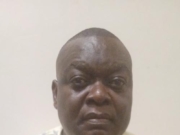
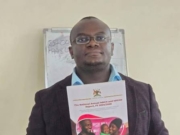
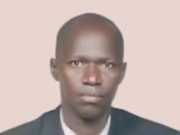
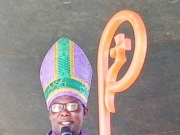
The voice is that of The Most Rev. Archbishop-Elect Professor Mugume Bagambaki Richard, a heavily theologically decorated, academically distinguished, ecclesiastically revered, and globally respected scholar-cleric, who serves as the Ecclesiastical Patriarch of the Five-Fold Episcopal World Federation (FFEWF), Archbishop of Upper City Covenant Churches, and President and Chancellor of Upper City Covenant Seminary and Theological Bible University (UCCSAT).
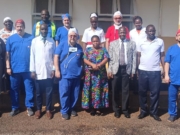
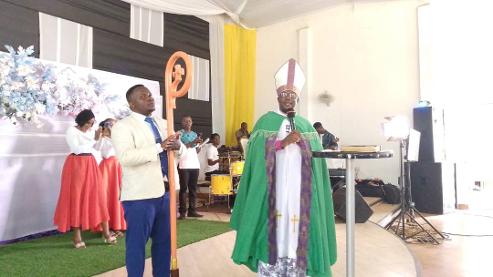
Standing Sunday before a congregation of bishops, pastors, seminary dons, and Christian leaders, the profoundly learned theologian and visionary university chancellor delivered a masterclass exposition on Daniel 1:1-21 under the theme “Purity, Purpose, And Promotion in Babylon.”
What followed was not a simple sermon, but a rare convergence of rigorous biblical hermeneutics, systematic theology, historical analysis, philosophical critique, and prophetic apostolic instruction.
His key text was Daniel 1:8: “But Daniel resolved that he would not defile himself with the king’s food, or with the wine that he drank. Therefore, he asked the chief of the eunuchs to allow him not to defile himself.”
Who Was Daniel? The Man Behind the Resolution?
To appreciate the message, the eminently scholarly Patriarch first painted a full portrait of the man Daniel himself.
Daniel was not an old pastor. He was a young prince, probably 15 to 17 years old, from the royal family of Judah, of the tribe of Judah. The Bible describes him as a youth “without blemish, of good appearance and skillful in all wisdom, endowed with knowledge, understanding learning, and competent to stand in the king’s palace.”
His name, Daniel, means “God is my Judge” – meaning God is the one who will ultimately vindicate and rule. He belonged to the same prophetic generation as Jeremiah and Ezekiel. While Jeremiah remained weeping in Jerusalem and Ezekiel was among the captives by the river Chebar, Daniel was thrust into the very palace of the enemy – the White House, Harvard, and Pentagon of his day combined.
God forged him into three offices in one: Prophet, Statesman, and Seer. He served with distinction for over 70 years under four kings – Nebuchadnezzar, Belshazzar, Darius, and Cyrus – from 605 BC to around 536 BC. He never married in Babylon, remaining as a consecrated eunuch and Nazarite unto God.
He was a man of the Book, a man of prayer who opened his windows toward Jerusalem three times daily despite a death decree, and a man with the rare anointing to interpret dreams and apocalyptic visions. The Book of Daniel is therefore half history (chapters 1-6) and half apocalyptic prophecy (chapters 7-12) – he saw the rise and fall of empires up to the coming of the Messiah.
The heavily decorated theologian noted that Daniel was accompanied by three friends – Hananiah, Mishael, and Azariah – who together formed the first “UCCSAT small group” in Babylon: covenant youth who refused to bow.
What Was Happening in Babylon? The System Behind the City?
What was Babylon that Daniel entered? The academically distinguished Chancellor explained that Babylon in 605 BC was the New York, Washington, and Oxford of the ancient world rolled into one.
Under Nebuchadnezzar II, after crushing Assyria and Egypt at the historic Battle of Carchemish, Babylon became the sole uncontested superpower. It was:
An unbeatable military superpower with an army that had never lost. An economic superpower adorned with gold, with the Hanging Gardens as one of the seven wonders. An intellectual superpower with vast libraries, advanced mathematics, medicine, and astronomy. And a religious superpower with over 53 temples and 180 altars dedicated to Marduk, Bel, Nebo, and other gods – a system that genuinely believed its gods had defeated Yahweh of Israel.
But Babylon’s genius was not just slavery; it was assimilation. The philosophically profound scholar-cleric emphasized that Nebuchadnezzar did not put the Hebrew youths in chains in the fields.
He put them in the palace university for a three-year re-education program. The goal was to make them Babylonian in language, literature, diet, and worship, so they could later serve as pro-Babylonian administrators over their own people. It was cultural colonization, not just captivity.
“We live in the same Babylon today,” declared the visionary prelate. “Our children attend Babylonian schools modeled on Babylonian epistemology. Our businesses operate in a Babylonian economy. Our ministries stream on Babylonian platforms. As Jesus prayed in John 17:16, we are in the world but not of the world. The question for FFEWF is not whether we will be in Babylon – we are already there. The question is whether Babylon will be in us.”
Why Did the Babylonians Capture Israel? The Spiritual and Political Cause.
Why did this happen to God’s chosen nation? The deeply exegetical and theologically astute Archbishop gave two levels of answer.
Spiritually, God Himself allowed it. For over 800 years, from Moses to the prophets, God had warned. Deuteronomy 28 was clear: obedience would bring blessing, but persistent idolatry would bring exile.
Judah had violated every clause of the covenant. They had filled even Solomon’s Temple with idols of Baal, Asherah, and Moloch. They had sacrificed their children in the Valley of Hinnom. They had oppressed the poor, the widow, and the orphan. They had shed innocent blood and murdered prophets like Zechariah, and ignored and imprisoned Jeremiah who preached for 23 years. For 490 years they had refused to give the land its Sabbath rest. Therefore, God gave the land 70 years of rest in exile, as 2 Chronicles 36:21 records.
So, God used Babylon as His rod of discipline. Jeremiah 25:9 shockingly calls Nebuchadnezzar “My servant” – not because he was righteous, but because God in His sovereignty used a pagan king as an instrument of judgment to bring His people to repentance.
Politically, Judah committed geopolitical suicide. As a small buffer state between Egypt and Babylon, King Jehoiakim foolishly rebelled against Babylon after becoming its vassal and aligned with Egypt for protection. Nebuchadnezzar came to punish rebellion and to secure the vital trade route to Egypt.
This happened in three waves: 605 BC – the first wave when Daniel and the royals were taken. 597 BC – the second wave when King Jehoiachin, Ezekiel, and 10,000 craftsmen were taken. 586 BC – the final destruction when King Zedekiah rebelled, Nebuchadnezzar burned Solomon’s Temple, broke the walls of Jerusalem, blinded Zedekiah, and took almost everyone, leaving only the poorest.
Who Were the Chaldeans? The Professors of Babylon.
A key phrase in Daniel 1:4 says Daniel was to be taught “the literature and language of the Chaldeans.” Who were they? The heavily theologically decorated professor gave a brilliant dual definition that clarified centuries of confusion.
The word Chaldean is used in two ways. Ethnically and politically, the Chaldeans were a Semitic tribe from the southern marshlands of Mesopotamia who were not originally Babylonian but migrated and eventually took over Babylon.
Nebuchadnezzar himself was ethnically a Chaldean. So “King of the Chaldeans” means the ruling dynasty that made Babylon an empire.
Professionally and academically, in Daniel, “Chaldeans” refers to the elite intellectual class – the Oxford dons, NASA scientists, and White House advisors of Babylon combined. They were the master scholars, astrologers, astronomers, magicians, dream interpreters, and priests of the empire.
They mastered three things: cuneiform literature and Akkadian and Sumerian classics, astrology and astronomy where they invented the 12 signs of the zodiac to predict destiny, and dream interpretation and enchantments where they claimed to commune with the gods.
When Daniel was enrolled in their university, it meant he was placed in the most prestigious imperial academy in the world to learn their science, philosophy, and worldview – so that he would think like a Babylonian.
But Daniel mastered their literature without imbibing their spirit. He learned their language but kept his faith. That, said the globally respected academic leader, is the ultimate model for UCCSAT – to be ten times better academically while remaining covenantally-pure.
The Four Tests of The Daniel Generation.
From this rich historical background, the profoundly learned Patriarch unpacked the four tests.
The Test of Identity – They Tried To Change Their Names.
He explained that in Hebrew thought, a name is ontology – identity, destiny, theology. To change it is spiritual colonization.
Daniel which means “God is my Judge” – becomes Belteshazzar – “Bel protects.” Hananiah – “Yahweh is gracious” – becomes Shadrach – “Command of Aku.” Mishael – “Who is like God?” – becomes Meshach – “Who is like Aku?” Azariah – “Yahweh has helped” – becomes Abednego – “Servant of Nebo.”
“Babylon’s first strategy is never to kill you; it is to rename you,” thundered the visionary Episcopal leader. “Today it tells the Pastor to become a CEO, the Prophet to become an Influencer, the Saint to become a Brand. When we accept Babylon’s names, we forfeit our apostolic authority.” The antidote is 1 Peter 2:9.
No wonder today we now have men and women of God who prefer the difficult-to-approach celebrity lifestyle with bodyguards and bouncers and Kanyama(body-built), mean-looking men surrounding the man of God as if he were a Babylonian despot.
The pulpit has been turned into a throne, the shepherd into an emperor and the flock must seek prior appointment to see the shepherded have traded the towel of John 13, where Jesus washed feet, for the scepter of Nebuchadnezzar. The humble Nazarene who said “Let the little children come to me” is now hidden behind layers of protocol, armed guards and VIP security. We are not any different from the Babylonian tyrants we claim to have conquered.
Babylon succeeded in renaming us-we now behave like Belteshazzar, not Daniel. But Daniel never forgot his name, even when Babylon gave him a new one. True apostolic identity is not celebrity, it is servanthood, it is accessibility and it is still “God is my judge”, not “Bel protects me”.
The antidote is 1 Peter 2:29 remembering that we are a chosen race, a royal priesthood that serves not a royalty that intimidates.
The Test of Defilement – They Tried to Change Their Diet.
The deeply exegetical Chancellor explained that the king’s food was first offered to idols and strangled without draining blood – eating was an act of worship and oath of loyalty.
But Daniel resolved. In Hebrew wayasem Daniel al libo – he set it upon his heart. Holiness is not a reaction; it is a pre-decision.
“Purpose precedes promotion. Resolution precedes revelation,” declared the heavily anointed prelate. Daniel did not protest; he proposed: “Test us for ten days with vegetables and water.”
This is the UCCSAT mandate – not just to condemn Babylon but to offer a superior alternative. Ten days of purity proved more powerful than three years of defilement.
The Test of Intellect – God Makes His People Ten Times Better.
“As for these four youths, God gave them learning and skill in all literature and wisdom” (v17). “He found them ten times better than all the magicians and enchanters” (v20).
The highly distinguished university president dismantled the false dichotomy between faith and learning. “Babylon can give you episteme – information. Only God can give you sophia – wisdom to interpret dreams and govern kingdoms. Babylon trains enchanters who guess; God raises prophets who know.”
“We are not anti-education. We are pro-excellence without compromise. UCCSAT exists to raise Daniels who sit in courts of presidents, ten times better because the Spirit of God is upon them.”
The Test of Endurance – They Lasted.
“And Daniel was there until the first year of King Cyrus” (v21) – nearly 70 years. Nebuchadnezzar died. Belshazzar died. The empire collapsed in one night. But Daniel remained.
“In this generation of viral moments, God is looking for pillars who outlast systems,” preached the ecclesiastically revered Patriarch. “Don’t just shine for a moment in Babylon; outlast Babylon.”
Five Prophetic Keys& Final Call.
Out of his vast apostolic experience, the heavily anointed Archbishop distilled five keys for FFEWF, Upper City Covenant Churches and UCCSAT: Resolve before temptation comes. Propose a better way. Understand that God honors purity with promotion – “God gave Daniel favor” (v9). Train the next generation, because Babylon targeted youths. And learn that you can serve in Babylon without becoming Babylon – be a civil servant, not a civil slave.
He closed with three questions: What is your name? Have you let Babylon rename you? What is on your table? What are you feeding your spirit? Will you outlast Babylon?
“Babylon has gold vessels, royal food, and the best university,” declared the heavily theologically decorated, academically distinguished, and ecclesiastically revered Archbishop in his benediction. “But God still has Daniels – men and women who have resolved they will not defile themselves, who are ten times better, and who will remain when Babylon is no more.”
The altar call from Deuteronomy 30:19 – “choose life” – saw many respond: “I will not defile myself.”
The service ended with Daniel 4:17: “The Highest rules the kingdom of men.”
For the global Church, the code has been authoritatively expounded by a heavily decorated theological general: Purity first, then Purpose, then Promotion.
The Preacher: The Most Rev. Archbishop Elect Professor Mugume Bagambaki Richard is a heavily theologically decorated, academically distinguished, and ecclesiastically revered scholar-cleric, serving as Ecclesiastical Patriarch of the Five-Fold Episcopal World Federation, Archbishop of Upper City Covenant Churches, and President & Chancellor of UCCSAT University. Contact: WhatsApp +256775050183 | Email: fivefoldepiscopalworldfederati@gmail.com