
























Text: DANIEL 2:1-49
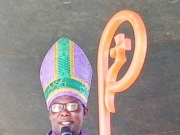
Preacher: The Most Rev. Archbishop Elect Prof. Mugume Bagambaki Richard, Patriarch, Five-Fold Episcopal World Federation, Archbishop, Upper City Covenant Churches, President & Chancellor, UCCSAT University
To understand Daniel chapter two, we must first understand the Book of Daniel itself. Chapter two is not an isolated story. It is the heart of one of the most powerful books God has ever given to man.
It is a statesman’s diary. It is a prophet’s telescope. It is a theologian’s philosophy of history. It is also a survival manual for the Church in hard times.
Preaching under the theme The God Who Reveals Secrets and Sets Up Kingdoms, Archbishop Mugume Bagambaki Richard took the Church through the book before opening chapter two. He insisted that no text can be understood until its context is honored.
About The Book of Daniel.
The Book of Daniel was written by Daniel himself. His name means “God is my judge.” He was a young prince of Judah, from noble blood. He was handsome, gifted in wisdom, and skilled in science.
He was taken captive to Babylon in 605 BC. He was only fifteen to eighteen years old. This was when Jerusalem was besieged and the temple vessels were taken.
Babylon selected the best of the Jewish youth. They were to be re-educated in Babylonian language and literature. They were to serve in the palace of a pagan king.
It was right there, in the center of idolatry, that God raised a prophet. This prophet would outlive empires. His book would outlive Babylon, Persia, Greece, and Rome.
The Book of Daniel has two great halves. Chapters one to six are historical narratives. They were written mostly in Aramaic, the language of empires. They show how God preserves His faithful people in a hostile system. We see Daniel in the lions’ den. We see his three friends in the fiery furnace. We see the handwriting on the wall for Belshazzar.
Chapters seven to twelve are apocalyptic visions. They were written mostly in Hebrew, the language of covenant. They show how God will finally judge those empires and set up His everlasting Kingdom.
Daniel is the only Old Testament book that gives a detailed blueprint of world empires from Babylon to the end of time. That is why critics have fought it for centuries. If Daniel is true, history is not random. Kingdoms do not rise by accident. God removes kings and sets up kings, as Daniel 2:21 says.
Daniel is also a book of integrity. Other youths ate the king’s meat and drank his wine. Daniel purposed in his heart not to defile himself, as Daniel 1:8 says. His consecration at the table became the foundation for revelation at the throne. God reveals secrets to those who keep themselves undefiled.
This book was written to encourage Jews in exile. God still rules in Babylon, it told them. It was also written to encourage us today. It tells Five-Fold Episcopal World Federation and Upper City Covenant Churches that God still rules in modern Babylon. Modern Babylon is full of media manipulation, political intimidation, occultic deception, and drug abuse. The same God who shut the mouths of lions can still shut the mouths of those who decree death against His people.
At the center of this book sits chapter two. Archbishop Mugume calls it the divine philosophy of history. God takes a pagan king’s forgotten dream and uses it to outline Gentile power. He shows how it will end when the Stone cut without hands becomes a mountain that fills the earth.
The Genre of The Book of Daniel: Why the Book Reads Like Two Books In One.
To fully understand why Daniel chapter two carries such weight, we must first understand the literary genre of the Book of Daniel itself, because Daniel does not use only one genre but two distinct genres that work together to reveal God’s complete purpose.
Scholars describe Daniel as a dual-genre book, which makes it stand alone in the entire Bible, as it combines history and apocalypse, palace life and heavenly visions, in one seamless message.
The first genre is Court Tales and Historical Narrative, found in chapters one to six, written mostly in Aramaic, which was the official language of empires, diplomacy, and government in that era.
This section reads like a statesman’s diary, documenting how faithful Jews not only survived but thrived and were promoted in a hostile pagan system that tried to re-educate and assimilate them.
It includes Daniel’s resolve over diet in chapter one, the forgotten dream of Nebuchadnezzar in chapter two, the deliverance from the fiery furnace in chapter three, the humbling of Nebuchadnezzar’s pride in chapter four, the handwriting on the wall for Belshazzar in chapter five, and Daniel’s preservation in the lions’ den in chapter six.
The message of this genre is clear and pastoral, showing that God still preserves and promotes His people when they are in Babylon, provided they refuse to defile themselves with the king’s compromises.
The second genre is Apocalyptic Literature and Prophetic Vision, found in chapters seven to twelve, written mostly in Hebrew, which is the language of covenant, promise, and God’s dealings with His people.
This section moves away from palace stories and opens the heavens, using symbolic language where beasts represent kingdoms, horns represent kings, and numbers represent seasons of divine dealing, with angels descending to interpret the visions for Daniel.
It is the Old Testament equivalent of the Book of Revelation, and indeed Revelation cannot be properly understood without Daniel, because both books reveal how human empires rise and fall until God establishes His everlasting Kingdom.
Inside these two major genres are smaller but powerful literary forms, including predictive prophecy in chapters two, seven, eight, nine and eleven, wisdom literature for living without compromise in a corrupt system, and profound prayer and worship in Daniel 2:20-23 and Daniel 9:4-19.
Archbishop Mugume Bagambaki Richard explains that Daniel chapter two is the bridge that holds both genres together, because it is a court tale that contains an apocalyptic blueprint, a story that begins in a palace bedroom but ends with a mountain filling the whole earth.
In essence, chapters one to six answer the question of how to live faithfully when you are in Babylon, while chapters seven to twelve answer how Babylon itself will finally end when God sets up a Kingdom that shall never be destroyed.
How Dreams Were Treated in Ancient Days.
We must remember how dreams were treated in ancient times. In Babylon, Egypt, and Persia, a dream was never taken lightly. It was not dismissed as too much food or tiredness. It was received as a message from the divine realm.
For Nebuchadnezzar, as for Pharaoh, the king’s bedroom was a council chamber. When the king slept, the gods were believed to speak. Kings made decisions that affected millions. So, ancients kept a whole university of dream experts at state expense.
They had magicians who used incantations. They had enchanters who watched stars. They had sorcerers who mixed potions. They had Chaldeans who mastered ancient books. They were not entertainers. They were high-ranking civil servants. A forgotten dream could mean a lost kingdom.
That is why Nebuchadnezzar was troubled. His sleep broke from him, Daniel 2:1. That is why he called all of them. No one laughed when he said he had forgotten the dream. No one said “it was just pizza.” They fasted. They sacrificed. They sought answers. They knew that if heaven troubles a king at night, heaven is Warning Him in The Day.
How Dreams Are Treated Now.
Today we have moved dreams from the temple to the couch. We have taken them from the prayer room to the laboratory. We have stripped them of divine weight. We have dressed them in theories that explain the dreamer but cannot explain kingdoms.
Modern man now treats dreams in three dismissive ways. Some ignore them completely. Some medicalize them as chemistry. Some trivialize them as jokes and gossip on morning radio.
The Great Divide: Psychologists & Scientists Versus Christians and Bible Scholars.
On one side stands the psychologist and scientist. On the other stands the Christian and Bible scholar. Both claim to interpret dreams. But they start from opposite directions.
Sigmund Freud taught that dreams are the royal road to the unconscious. He said they are disguised fulfillments of repressed wishes, mostly sexual and infantile.
Carl Jung went a bit broader. He spoke of archetypes from the collective unconscious that seek to balance the soul. He called this individuation.
Modern neuroscience goes further. It says dreams are random electrical impulses in REM sleep. The brain is just consolidating memory and cleaning emotional clutter. It says there is no prophetic value at all.
Their conclusion is simple. Dreams come from beneath you. They come from your subconscious, your trauma, your biology. So, interpretation lies within you. You need therapy, drugs, or sleep hygiene.
The Christian and Bible scholar says something different. The Bible admits that some dreams come from daily toil. Ecclesiastes 5:3 says a dream comes through much activity. Ecclesiastes 5:7 says many dreams are vanity. Job speaks of terrifying dreams that torment the soul.
But Scripture is clear that God still speaks in dreams. He spoke to Abimelech in Genesis 20 to restrain him from sin. He showed Jacob a ladder to heaven in Genesis 28. He gave Joseph dreams of rulership in Genesis 37 that sustained him through betrayal.
He guided Joseph the husband of Mary three times in dreams to protect Jesus from Herod, in Matthew 1 and 2. He warned Pilate’s wife in a dream in Matthew 27:19. She suffered much because of Jesus in a dream. At Pentecost, Peter quoted Joel that ‘old men shall dream dreams’, Acts 2:17.
Psychology says a dream reveals the self. Theology says a dream can reveal the Savior and the future. Psychology looks backward into childhood. Theology looks upward into calling and forward into eternity.
Psychology asks, “What does this say about your past?” Theology asks, “What is God saying about your destiny and nations?”
That is why a Nebuchadnezzar-type dream cannot be interpreted on a couch. It is a blueprint of four empires and a final divided empire. The couch is too small for a mountain that must fill the whole earth. No analysis can tell a king his gold will become dust. Only a God in heaven who reveals secrets can do that.
Unlike Now: When Troubled People Run Everywhere Except to God.
Here Archbishop Mugume contrasted Daniel with our generation. His words cut like a surgeon’s knife into our culture of escape.
Unlike Daniel, who faced a death decree and did not panic, today people panic when troubled. When they face a threatening dream, a collapsing business, a scandal, a sickness, a breaking marriage, a court case, or a straying child, they run everywhere.
Some convene news conferences to defend themselves. They try to control the narrative. They seek public sympathy. They believe microphones will solve what only mercy can solve.
Others hold talk shows on TV and radio. Others rush to YouTube and podcasts. They turn pain into content. They turn secrets into interviews. They expose wounds to an audience that claps but cannot deliver. They seek validation from comment sections that cannot give revelation.
Others run to embassies for visas and asylum. They believe geography will solve a spiritual problem. They think leaving the country will remove the problem. They forget Nebuchadnezzar’s problem was not in another country. It was in his own bedroom.
Others run to police stations, to CID, to courts, to powerful people. They hope intimidation and connections will silence what only God can solve. They forget you cannot arrest a dream. You cannot handcuff a spiritual mystery.
Others sneak to witchdoctors, shrines, and fetish priests. They seek to bewitch others or find protection. They leave the God who reveals secrets for spirits that only deepen secrets and enslave souls.
And others hide in bars and nightclubs. They hide in alcohol, drugs, immorality, loud music, and endless scrolling. They run away from their most disturbing issues. They anesthetize what they should analyze on their knees. They postpone what they should confront in prayer. Then the dream becomes a nightmare. The nightmare becomes a death decree.
Daniel did none of that. That is why Daniel still speaks today.
Scripture says with divine simplicity: “Then Daniel went to his house, and made the thing known to Hananiah, Mishael, and Azariah, his companions: That they would desire mercies of the God of heaven concerning this secret.” Daniel 2:17-18.
Daniel did not call a press conference. He called a prayer meeting. He did not go to a talk show. He went to his house. He did not run to an embassy. He ran to his covenant companions. He did not run to police. He ran to mercy. He did not sneak to a witchdoctor. He sought the God of heaven. He did not hide in a bar. He opened heaven in the night watch.
The result is forever written: “Then was the secret revealed unto Daniel in a night vision. Then Daniel blessed the God of heaven.” Daniel 2:19.
The world runs outward when troubled. It runs to media, embassies, police, shrines, and bottles. The Daniel Company runs upward. The world seeks publicity. Daniel sought privacy with God. The world seeks to expose others. Daniel sought mercy. The world seeks to escape the problem. Daniel sought to reveal the secret behind the problem.
Archbishop Mugume declared that FFE WF must be known not as a federation that organizes conferences, but as one that shuts the door and prays until heaven opens. UCCSAT must teach that revelation comes before research. Communion births interpretation. Academic excellence without night visions becomes Babylon. But prayer that seeks mercy brings down blueprints that can govern nations.
The Image & The Kingdom.
With the secret received in prayer, Daniel walked into the palace that had sentenced him to death. He declared the line that divides counseling from prophecy: “There is a God in heaven that revealeth secrets.” Daniel 2:28.
He then unfolded the dream. It is God’s philosophy of history. A great image stood, terrible in brightness.
The head of gold was Babylon. It had splendor and absolute power.
The chest and arms of silver were Medo-Persia. Two arms stood for two peoples. It was inferior in glory but larger in extent.
The belly and thighs of brass were Greece. It was swift in war under Alexander.
The legs of iron were Rome. Iron breaks and subdues all things. It had two legs, East and West.
The feet and ten toes were part iron and part clay. This is the final phase of human government. This is our own time. Iron stands for technology, military strength, and political power. Clay stands for fragile humanity, divided families, and weak morality.
Scripture says they shall mingle but shall not cleave, just as iron is not mixed with clay, Daniel 2:43.
Look around, the archbishop said. We see iron and clay everywhere. We are connected by iron – internet, AI, satellites, missiles, money. But we do not cleave. Husbands and wives live in the same house but do not cleave. Nations sign treaties but do not cleave. Parties form coalitions but do not cleave. Iron and clay cannot hold together.
Then the gospel strikes in Daniel 2:34-35: “Thou sawest till that a stone was cut out without hands, which smote the image upon his feet that were of iron and clay, and brake them to pieces… and the stone that smote the image became a great mountain, and filled the whole earth.”
That Stone is Christ. He was cut without hands. He was not made by human politics. He was not made by human sperm. He was born of a virgin. He was conceived by the Holy Spirit. He is heaven-made and God-sent.
He does not strike the head when Babylon is strong. He strikes the feet when man’s system is weakest. When He strikes, all that man has built becomes chaff. The wind carries it away. No place is found for them. But the Stone becomes a mountain.
That mountain is the Kingdom in Daniel 2:44: “And in the days of these kings shall the God of heaven set up a kingdom, which shall never be destroyed: and the kingdom shall not be left to other people, but it shall break in pieces and consume all these kingdoms, and it shall stand forever.”
Human kingdoms rise and say “we shall be.” Only God’s Kingdom says “it shall stand forever.” All other kingdoms are left to others. This Kingdom shall not be left to another. It is unshakeable. Hebrews 12:28 says, “We receiving a kingdom which cannot be moved.”
Promotion That Still Points To Heaven.
When Daniel finished, Nebuchadnezzar fell on his face. He said, “Of a truth it is, that your God is a God of gods, and a Lord of kings, and a revealer of secrets.” Daniel 2:47.
Daniel was promoted. He was made ruler over Babylon province and chief over all wise men. His three friends were set over the affairs of the province, Daniel 2:48-49.
The Book of Daniel shows God still promotes those who point Babylon back to heaven. Daniel said, “But as for me, this secret is not revealed to me for any wisdom that I have… but there is a God in heaven.” Daniel 2:27-28.
In a generation where people use revelations to build their own image on YouTube, Daniel used his revelation to reveal God. That is Episcopal integrity. That is Upper City character. That is UCCSAT theology. When you refuse to run to media, embassies, witchdoctors, and bars, and run to God, God will make kings bow not to you but to your God.
Conclusion.
The Book of Daniel leaves us with two questions.
First, where do you run when disturbing issues come? Do you run to news conferences, TV, radio, YouTube, podcasts, embassies, police, witchdoctors, bars, and drugs? Or do you run like Daniel to your house, to your Hananiah, Mishael, and Azariah, to desire mercies of the God of heaven who still reveals secrets?
Second, which kingdom are you building? Are you building with iron and clay, with sensationalism and intimidation? That image will be blown away as chaff. Or are you part of the Stone cut without hands? Are you part of the mountain that is already growing and shall stand forever?
The God who revealed a forgotten dream in Babylon still reveals secrets today to those who seek mercy. The God who shut lions’ mouths in Daniel 6, who delivered three boys from fire in Daniel 3, and who wrote on Belshazzar’s wall in Daniel 5, is still setting up a Kingdom that shall never be destroyed.
Choose the mountain over the image. Choose the prayer room over the press conference. Choose the God of heaven who reveals secrets over every escape route that leads to dust.
Benediction: “Blessed be the name of God for ever and ever: for wisdom and might are his… he revealeth the deep and secret things.” Daniel 2:20-22. “His dominion is an everlasting dominion, which shall not pass away.” Daniel 7:14.
+The Most Rev. Archbishop Elect Professor Mugume Bagambaki Richard
Ecclesiastical Patriarch, Five-Fold Episcopal World Federation
Archbishop, Upper City Covenant Churches
President & Chancellor, UCCSAT University
Tel / WhatsApp: +256775050183