


Like Hippocrates of Kos, also known as Hippocrates II, the father of medicine said while talking about healing, “Healing is a matter of time, but it is sometimes also a matter of opportunity”, little did he know that his axiom, spoken over 2,400 years ago on the Greek island of Kos would become the central philosophy of modern preventive medicine.
Hippocrates was teaching his students that the body has its own rhythm of recovery, but that rhythm means nothing if the physician misses the window to act. A wound left untended festers, a fever ignored consumes, and a disease caught late becomes untamable.
In essence, he was warning that time alone does not heal, it is what we do within that time that decides life or death. So is the fight against women’s cancer in Busoga sub region today, a race against time where the opportunity to screen, to vaccinate, to detect early is the difference between a mother living to raise her children and a family left to mourn.
It is against this background that Rays of Hope Hospice Jinja (RHHJ) is seizing the opportunity that Hippocrates spoke about.
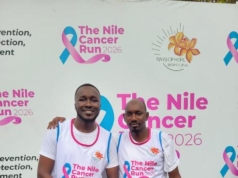
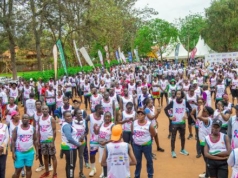
RHHJ has announced that the Nile Cancer Run 2026 will take place on Saturday, 24th October 2026, with hundreds expected to walk 5 kilometers, run 10 kilometers and ride 15 kilometers to maximize full community participation.
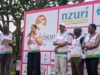
The announcement was made by Executive Director Ms. Sylvia Nakami, who said this year’s edition, now in its 8th year, aims to be the biggest community mobilization for women’s cancer in Busoga sub-region.
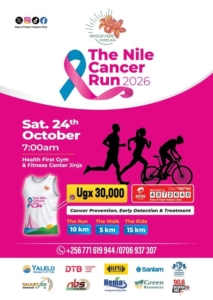
In an email to The Exposure Uganda (TEU), Ms. Nakami said full details will be unveiled on Thursday, 1st October 2026, during a news conference at the hospice headquarters on Plot 18B Kiira Road in Jinja City.
Partners this year include Smart FM, NBS FM, Busoga One FM, Diamond Trust Bank, Yalelo Uganda, Busoga Green Resources, Sanlam, Cavendish University and other sponsors. Officials from the Ministry of Health headquarters, Uganda Cancer Institute(UCI), Jinja Regional Referral Hospital(JRRH) and members of the Board of Directors are expected to attend the launch.
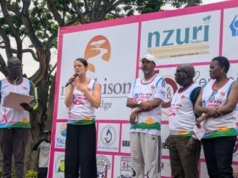
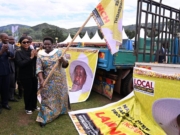
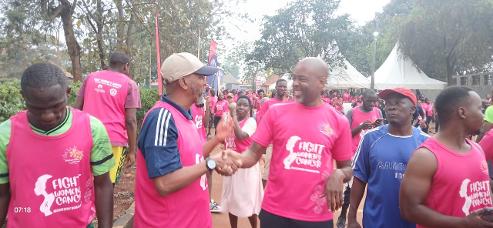
In 2025, the event was held on 25th October, with Busoga Kingdom Second Deputy Prime Minister Owek. Hajji Noor Ahmed Osman as chief walker and guest of honour.
Objective of the Run.
According to Ms. Nakami, the run, branded Fight Women’s Cancer Run, was inspired by the high number of women diagnosed with cervical and breast cancer at late stage.
“The objective is simple: Prevent. Detect. Treat. Defeat – Because Every Woman Matters,” Nakami said.
The run aims to raise awareness that cervical and breast cancers are preventable and treatable if detected early, to raise funds for community screening, treatment support and HPV vaccination, to promote physical fitness as prevention for non-communicable diseases, and to break the stigma that cancer is a death sentence.
RHHJ says funds raised in 2025 targeted Shs 150 million to vaccinate 3,000 girls against Human Papillomavirus (HPV) and screen more than 10,000 women. This year’s target will be announced on 1st October, but the focus remains the same.
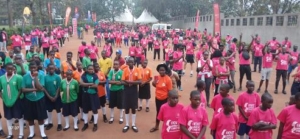
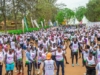
The venue has traditionally been Health First Gym and Fitness Centre, commonly known as Hared Health Club, near Jinja Rugby Grounds, about a kilometer from the Source of the Nile. Participants dress in pink and the city turns pink for a day.
How Women’s Cancer Kills in Uganda.
In Uganda, cervical and breast cancers are the leading causes of cancer deaths among women. Cervical cancer accounts for 20.5% of all new cancers in Uganda. It is caused by persistent infection with high-risk HPV.
It starts as silent precancerous changes on the cervix that have no symptoms for years. Without screening, it progresses to invasive cancer that bleeds, blocks the kidneys, spreads to the uterus and other organs, and kills.
Breast cancer often starts as a painless lump. Without early examination, it spreads to lymph nodes, lungs and bones. It kills so many Ugandan women because of late presentation. About 73% of women enrolled at RHHJ with cancer had cervical or breast cancer and came when the disease was already advanced, making survival minimal.
Nationally, only 5% of sexually active women have ever been screened for cervical cancer and only 7% to 13% have had a clinical breast examination, according to Uganda Cancer Institute data.
There is limited knowledge and access. Rural women do not know the signs, fear diagnosis, and screening services are not readily available. There is also low HPV vaccine uptake.
WHO recommends vaccination for girls aged 9 to 13 before sexual activity, but vaccines expire in facilities due to lack of funds to transport health workers to schools while eligible girls remain at risk.
Ministry of Health officials say Uganda records about 3,000 new cases of cervical and breast cancer annually, with nearly half resulting in death.
What WHO Says: A Preventable Tragedy.
According to the World Health Organization, cervical cancer is one of the most preventable and curable cancers if detected early, yet it remains the fourth most common cancer among women globally. WHO estimates 604,000 new cases and about 280,000 to 350,000 deaths were recorded in 2024 alone.
WHO says the highest rates of incidence and mortality are in low- and middle-income countries, including sub-Saharan Africa, which reflects major inequities in access to vaccination, screening and treatment.
Cervical cancer is caused by persistent infection with HPV, and women living with HIV are 6 times more likely to develop it. It is the leading cause of cancer death in women in 26 countries, primarily in sub-Saharan Africa.
To end this, WHO launched the Global Strategy to Eliminate Cervical Cancer as a Public Health Problem. It is anchored on the famous 90-70-90 targets by 2030: 90% of girls fully vaccinated with HPV vaccine by age 15, 70% of women screened with a high-performance test by age 35 and again by 45, and 90% of women with pre-cancer or invasive cancer receiving appropriate treatment.
WHO Director-General Dr Tedros Adhanom Ghebreyesus said: “In 2018, I was proud to launch the global call to action on cervical cancer elimination, and I’m even prouder now to see what was once a distant dream becoming a reality. More and more countries are scaling up HPV vaccination, improving screening, and expanding treatment.”
The first-ever World Cervical Cancer Elimination Day was marked on 17th November 2025, mandated by the World Health Assembly. By end of 2025, Gavi and partners estimated 86 million girls had been reached with HPV vaccination, while 32 African countries have introduced HPV vaccination into routine immunization.
WHO also confirms that highly vaccinated populations have seen up to 90% reduction in high-risk HPV infections, and studies from England show zero deaths due to cervical cancer among highly vaccinated cohorts aged 20 to 24 between 2020 and 2024.
For Busoga, this is very important because Uganda is far below the 70% screening target, and Busoga is even lower. The Nile Cancer Run is therefore a direct local contribution to WHO’s global elimination strategy.
Status Report: Rays of Hope Hospice Jinja.
RHHJ is a non-profit, inter-faith organization founded in 2005 to provide home-based holistic palliative care in Busoga Region and Buikwe District. It now has 34 staff and 85 community volunteers. The main office is in Jinja and the field office is in Buyende District, which cares for 23% of enrolled patients. Field teams go out in 4 teams daily and drive 12,000 km per month.
In 2023, RHHJ cared for 1,301 people. 64% were women and 7% were children. 72% have cancer, with 64% having cancer alone, 8% cancer and HIV and AIDS, 8% severe HIV and AIDS and 20% other life-limiting diseases.
Since 2018, RHHJ has screened over 15,500 women for cervical cancer. On average 1 in every 16 women screened is found with precancerous or suspicious lesions, and 2% have breast lumps. Those with precancerous lesions are treated on site, others are referred to Uganda Cancer Institute with support for transport and diagnosis.
Since 2019, RHHJ has trained over 350 health workers in a 3-day basic palliative care course and is training government health workers in cervical screening. In collaboration with government since 2023, it has helped vaccinate over 40,000 girls against HPV.
RHHJ provides free home-based care and free pain and symptom control medication to help patients live last days in dignity, psycho-social and spiritual support for patients and families, support for cost of diagnosis and treatment for poor patients, and community education and screening outreaches in schools, businesses and health centers.
Why It Should Be Supported: A Kit Is Only 30k.
A kit goes for only 30k, but as the ancient Chinese philosopher Lao Tzu (Laozi) said, a journey of a thousand miles begins with one step. That first step may look small, buying one kit, walking 5 kilometers, but without it the thousand miles will never be covered.
The fight against women’s cancer started with a few nurses moving home to home in 2005, and today it has become a movement that has reached 15,500 women.
Your one step of 30k becomes part of that journey. It pays for screening that finds a precancerous lesion early and treats it in 10 minutes.
Again, they say “one by one makes a bundle”, which means no single person can fund screening for 10,000 women or vaccinate 3,000 girls, but when each of us contributes 30k, when market vendors, civil servants, kingdom officials, the business community, students, bankers, farmers and corporate companies each bring their stick, the bundle becomes strong.
This is how RHHJ has survived for 20 years, not on one big donor, but on small acts bundled together. One kit alone screens one woman. One hundred kits fund a whole village outreach. One thousand kits keep a field team on the road for 12,000 km every month.
And as the Luganda proverb says, which is also clearly understood among the Basoga, Agali awamu ge galuma enyama – teeth that stay together can chew meat.
No single tooth can chew meat alone, it takes teeth working together to bite and grind. That is the soul of this run. Cancer is too hard for one person to chew alone.
But when we come together – when communities, radios, banks, schools, hospitals and ordinary neighbors act as one set of teeth – we can chew and crush even the hardest problem. When we stay together, we can screen more women, vaccinate more girls and save more mothers. Divided we fail, together we bite through cancer.
Cancer affects women and girls who are the mothers of the nation. Once a mother is down, the whole family is affected and ultimately the country suffers. This is preventable. Early detection saves money and lives because treatment at stage 1 costs far less than palliative care at stage 4.
Busoga is a high burden region with high vulnerability and low incomes. Most patients have resigned to waiting for death without support. The biggest barrier is not vaccines but transport, fuel to take nurses to schools and villages.
That is why everyone should join. The 30k is not just a t-shirt. It is that one step, that one stick in the bundle, that tooth that joins others to chew the meat. It pays for a village outreach, it fuels a field team, it buys dignity.
Corporate sponsors, individuals and well-wishers can support by registering for the 5KM walk, 10KM run or 15KM ride, donating towards screening kits, sponsoring a girl’s HPV vaccine, or volunteering.
Full details of registration fees, kit collection and chief guest for 2026 will be announced at the 1st October press conference.