


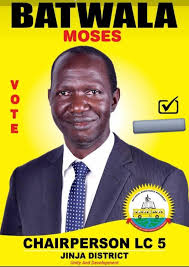











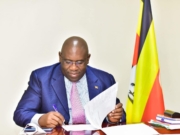



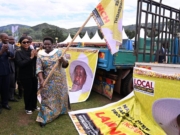


He went to court to remove Batuwa, he left paying Batuwa.
After weeks of courtroom warfare, after affidavits piled upon affidavits, after photocopies, disputed tally sheets, claims of a secret second count and whispers of ballot boxes opened in the dark, the High Court in Jinja has spoken, and it has spoken with a hammer, not a whisper.
In a 164-page judgment, Justice Vincent Wagona did not merely dismiss Hon Balyeku Moses Grace, he demolished him. Page after page, paragraph after paragraph, exhibit after exhibit, the judge threw out Election Petition No. HCT-03-CV-EP-0003-2026, Balyeku Moses Grace v Batuwa Timothy Lusala and the Electoral Commission, in its entirety and ordered Balyeku to pay the legal costs of both Batuwa and the Electoral Commission.
It was not a judgment on a technicality, it was a judgment on the merits. The High Court found that Balyeku, the petitioner, failed to discharge the onus probandi, the burden of proving his claims. He failed to meet the statutory threshold set by Parliament under Section 80(1)(a) of the Parliamentary Elections Act. And he failed, fatally, on his own numbers.
In the language of election law, Balyeku did not prove non-compliance, that election officials broke the electoral law, let alone substantial effect, that any mistake actually changed who won. And where he invited the court to re-compute the outcome, the re-computation enlarged, not erased, Batuwa’s victory. This was not a judicial reprieve for Batuwa, not a lucky escape given by the judge. It was a judicial affirmation of the popular will, the court confirming what the voters had already decided on 16 January 2026.
Jinja South: The Political Battleground.
That verdict takes us back to Jinja South Division West, a constituency that has become the centre of national attention. It is no backwater but a bellwether constituency, a seat whose result often shows which way the whole country is leaning. It sits in a city that has become Uganda’s most watched urban political theatre, a former NRM bastion, a former stronghold where the ruling party used to win easily, now contested street by street, parish by parish, by the opposition National Unity Platform.
Six parishes, 63 polling stations, 32,313 registered voters and nine candidates on the ballot. The Electoral Commission declared Batuwa Timothy Lusala of NUP with 4,900 votes, Balyeku Moses Grace of NRM with 3,083 votes, a margin of 1,817 votes. In electoral arithmetic, a margin of 1,817 in a parliamentary race is not marginal. It is a decisive mandate, a clear instruction from voters that Batuwa should represent them. It is not within the margin of administrative error. It is a political statement.
Balyeku, however, cried foul. He sought to vitiate the result, to make it legally useless, to have it declared null and void ab initio, void from the very beginning as if it never legally existed, and to have himself declared the duly elected MP or, in the alternative, as a second choice, to have a fresh election ordered.
His case rested on three pillars. The first was an incomplete tally, that not all polling stations were counted. The second was ultra vires second tally, that the Returning Officer acted beyond her legal power when she allegedly counted again on 6 February 2026. The third was altered results, that the results were changed afterwards, culminating in the Gazette of 2 March 2026, the official government publication where final election results are printed. All three pillars collapsed under judicial scrutiny.
The Missing Stations And The Man Utd Joke.
Turning to that first pillar, the claim of missing stations, the court found a story very different from the one Balyeku told. His headline claim was seductive in its simplicity: ten polling stations were excluded, and those ten would have flipped the seat. He listed Rippon Nile Avenue Gardens, Mvule PMM Secondary School, Ambercourt St John Church, Kimaka Glory Be to God Church East, St Gonzaga Catholic Church, National Housing Destitute Home Kateyamba Centre and four others in Nalufenya. He argued that with all ten, he would win by 1,030 votes. With only four, he would still win by 18 votes.
It was a counterfactual, a what-if argument based on what might have happened, built on speculation. The court treated it as such. And here Balyeku’s what-if deserves a football translation, because Jinja understands football better than it understands election law.
His argument was exactly the famous TikTok joke among Manchester United fans today. You have heard it. You have laughed at it. It goes like this: If Arsenal lose all their remaining games, and if Man City lose all their remaining games, and if Man United win all their remaining games, then Man United can easily take the trophy.
On TikTok, it is comedy. In court, Balyeku tried to make it jurisprudence, a serious legal argument. The logic is the same. The fantasy is the same. If this happens, and if that happens, and if the other thing also happens, then I win. It is mathematics built on miracles.
It is a title challenge built on other teams collapsing. Just like United fans know deep down that Arsenal and City are not going to lose every game, the court knew that Balyeku’s ten stations were not going to deliver him a miracle. A what-if is not evidence. A TikTok joke is not a tally. And a court, unlike TikTok, does not award trophies for imagination.
Justice Wagona found that the evidential record supported the exclusion of only four stations, not ten. And crucially, the reason for exclusion was not conspiracy but administrative default, officials simply failing to deliver results to the tally centre. That is maladministration, poor management and mistakes by officials, not malpractice, deliberate cheating. In election jurisprudence, the way courts have interpreted election law over time, the distinction is everything. Maladministration does not ipso facto nullify an election, it does not automatically cancel an election just because it happened. Malpractice, if proved to have substantially affected the result, might.
At St Gonzaga, the failure was even more profound. The original blank Declaration of Results Forms, the official forms on which polling station results are written and signed, disappeared before completion. Police opened Kiira Central Division CRB No. 223/2026. Electoral materials were impounded, seized and kept by police. No results were ever recorded. You cannot add what was never recorded. You cannot claim victory from a vacuum.
The Phantom Second Tally.
From the missing stations, the story moves to the most explosive allegation of all, the alleged secret second count. The most incendiary allegation was that of a clandestine re-tally, a secret recount done in hiding, that the Returning Officer, acting ultra vires, beyond the power the law gave her, and without jurisdiction, without legal authority, reopened ballot boxes on 6 February 2026 and manufactured a new result after Batuwa had already been declared.
If proved, that would have been a constitutional anathema, something totally unacceptable under the Constitution, a direct assault on the sanctity of the ballot, on the trust that must protect every vote. But the petitioner offered no direct evidence. No eyewitness. No impounded ballot box. No chain of custody broken on record. What he offered was hearsay upon hearsay, rumour built on rumour, an unrecorded telephone conversation whose date he could not recall.
Batuwa and the Electoral Commission, the respondents defending the case, countered with a coherent, contemporaneous account, a clear story that matched what happened at the time. They said the figures announced at 6:45 p.m. on 16 January were provisional, temporary and not final, a running tally. The final declaration was at 9:45 p.m., on 59 stations. The 6 February document was not a fresh tally but an administrative copy, just a photocopy for office filing, of a return already printed on 22 January.
Justice Wagona accepted that account. He found as a fact that there was one final declaration, and only one. In legal terms, the allegation of a second tally was not proved on a balance of probabilities, not proved to be more likely true than not, let alone to the heightened standard required in election petitions where allegations verge on criminality. The court will not nullify a parliamentary mandate, it will not cancel the authority voters gave to an MP, on the strength of a phone call the petitioner cannot date.
Where The Case Died: The Documents.
From that phantom tally, the judgment then turns to where the case truly died, in the documents themselves. Here the judgment turns from political drama to forensic demolition, to a careful, piece-by-piece destruction of the evidence. Election petitions are won or lost on primary evidence, the original, first-hand proof.
The Declaration of Results Form is the sacred text of the polling station. It is a public document. Secondary evidence, copies like photocopies, is admissible, allowed to be used in court, only if a proper foundation is laid, only if the person explains legally why the original is not available. Balyeku laid no such foundation.
On the affidavits, the written sworn statements of witnesses, Wagona was generous. He rejected Batuwa’s argument that identical paragraphs rendered affidavits defective. Similarity of language, he held, goes to weight, how much the judge trusts it, not admissibility, whether the court is allowed to look at it at all, where personal knowledge is shown. The affidavits survived. The documents did not.
The court expunged the uncertified photocopies, it removed them completely from the court record as if they were never presented, of DR Forms, tally sheets and return forms. Why? Because the petitioner failed to produce the originals or explain their absence in law. Worse, his own witnesses conceded under cross-examination, when they were questioned toughly by the other side’s lawyers, that the originals remained in their personal custody, yet were never produced despite challenge. That is evidential suicide, killing your own case by hiding your best proof. In the eyes of the court, it invites an adverse inference, the judge is allowed to assume the hidden evidence would have hurt your case.
Then came the serial numbers. Per the Commission’s official packing list, each DR Form bore a unique distinguishing serial number, a special number that should be different for every polling station so forms cannot be confused or duplicated. The photocopies tendered by Balyeku’s witnesses bore identical serial numbers for the same stations. Identical serials, different witnesses and same stations.
Justice Wagona called it what it was: a grave reliability concern. The foundation of Balyeku’s alternative arithmetic, his 1,030-vote victory, his 18-vote victory, was built on documents the court could not trust and would not admit. Once expunged, there was nothing left to compute. The petition was bereft of documentary substratum, left with no documentary base to stand on.
But Justice Wagona did not stop at expungement. He did what a thorough election court must do: he tested the petitioner’s hypothesis against the best available evidence. That evidence came, ironically, from Batuwa, certified DR Forms, forms officially stamped and confirmed as true copies, properly admitted, properly proved.
At Rippon Nile Avenue Gardens, Balyeku got 43 votes, Batuwa got 81. At Mvule PMM Secondary School, Balyeku got 35, Batuwa got 77. At National Housing Kateyamba Centre, Balyeku got 39, Batuwa got 64. In total, Balyeku got 117, Batuwa got 222. The three stations Balyeku claimed as his reservoir of stolen votes, his secret store of votes that would save him, delivered a two-to-one verdict for Batuwa.
The court then performed the re-computation. The declared result was Batuwa 4,900, Balyeku 3,083, margin 1,817. The adjusted result, after adding the three stations, was Batuwa 5,122, Balyeku 3,200, margin 1,922. The margin widened by 105 votes. This is the locus classicus, the classic example that lawyers will quote in future, of a petition defeating itself. The petitioner asked the court to add the missing votes. The court added them. The petitioner lost by more. It was, in political terms, a self-inflicted wound. In legal terms, it was conclusive proof of no substantial effect, final proof that the mistakes did not change the winner.
The Law Is Unforgiving.
From the numbers, the judgment then moves to the law itself, and the law is unforgiving. Justice Wagona anchored his reasoning in Section 80(1)(a), Parliamentary Elections Act, the high watermark, the highest standard a petitioner must reach. The section does not ask: Were there errors? It asks: Did the non-compliance substantially affect the result? Did the mistakes actually change who won? Procedural irregularity, a small mistake in following procedure, without substantial effect, is legally sterile, it cannot produce any legal result, it cannot cancel an election.
The court found that candidates and agents were present at the tally centre, results were read aloud, objections were entertained. The process was transparent, open for all to see, even if imperfect. It distinguished the authorities, it showed why previous court decisions were different, relied on by Balyeku, Apollo Kantinti v Sitenda Sebalu and Wakayima Musoke Nsereko v Kassule Robert Sebunya, on the ground that those cases involved large numbers of affected voters and omitted results capable of placing the margin in serious doubt, capable of making people genuinely unsure who won.
Here, the omitted results were known, proved, and they fortified the declared winner, they made Batuwa’s victory even stronger. There was, therefore, no basis to invoke Section 82, no legal reason to use that section, to set aside the election, to cancel it. The petition had to fall.
That brings us to the orders, and the orders were short, sharp and final. The court made two consequential orders. First, petition dismissed in its entirety, the whole case thrown out completely. Second, petitioner to pay costs to both respondents, Balyeku must pay the legal bills of Batuwa who was represented by his fellow NUP bed fellow Hon Abed Nasser Mudiobole and the Electoral Commission represented by Okello Oryem. Costs, as every practitioner knows, follow the event, the loser pays the winner’s costs, unless there are special circumstances, special reasons to do otherwise.
Unforunately, Justice Wagona found none. The petition had consumed extensive affidavit evidence, numerous witnesses, voluminous exhibits, a huge amount of documents, and detailed submissions. The petitioner who forces that expenditure and fails must bear it.
This is not mere punishment. It is a deterrent signal, a warning to others, to future litigants, people who want to bring similar cases: do not come to court with photocopies and phone calls and expect to overturn the people’s verdict, the decision voters made.
The Political Fallout.
And so we come to the political fallout, because this was never just a court case. It was a political earthquake in Jinja. For Batuwa Timothy Lusala, this is total vindication, complete clearing of his name. His mandate is no longer merely declared. It is judicially affirmed, confirmed by a court. He enters Parliament not under a cloud, not under suspicion, but under a court seal, with the authority of the judiciary behind him.
For the NRM in Jinja, this is a double defeat, electoral in January, judicial in November, and a financial liability in costs. It raises an uncomfortable intra-party question, a difficult question inside the party itself: was this petition a genuine pursuit of justice, or a face-saving litigation, a court case filed just to save face and appease a bruised base, to calm disappointed supporters?
For the Electoral Commission, this judgment is a full vindication. When a court upholds a declaration after a full trial, after 164 pages of scrutiny, after testing every allegation of a second tally and every disputed form, the Commission’s image is not damaged, it is strengthened.
Its tally is confirmed, its declaration is confirmed, and public trust in its work is reinforced, not weakened. The Commission walks out of Jinja with its credibility intact, its process validated, and its authority to declare results for Jinja South Division West affirmed by the High Court.
For Jinja South Division West, the ruling brings legal certainty, everyone now knows legally who the MP is, and political closure, the political fight is over. No fresh tally. No by-election, no new election to fill the seat. No Gazette cancellation. The constituency can now move from litigation, from fighting in court, to representation, to being served by its MP, from courtroom to service delivery.
In the end, this judgment will be cited for years, not because it is novel, new and strange, but because it is orthodox, it follows the traditional, accepted rules of election law, a masterclass in election law orthodoxy. It restates three immutable principles, three rules that cannot be changed. First, he who alleges must prove. If you make a claim, you must prove it.
The burden never shifts. Second, photocopies are not proof. Without foundation, without originals, without unique serials, they are inadmissible chaff, useless material the court cannot use. Third, arithmetic is destiny. In the end, the numbers decide.
If your missing stations give your opponent more votes, you have no case. Balyeku came to court alleging a stolen election, claiming the election was taken from him unfairly. He left with a court finding that, if anything, the election had under-counted his opponent’s win, the official count had actually given Batuwa fewer votes than he deserved.
From Tears To Tears: The Winter Continues.
And here, the story turns from law to the human tragedy of a political career caught in a long winter. For Balyeku Moses Grace, this ruling does not just end a petition. It extends his political darkness and coldness for another five years, five more years in the political cold, outside Parliament, outside power, outside the room where decisions for Jinja South Division West are made.
It is a darkness he knows too well, because he has been here before. Way back in 2021, on this same political pitch, in this same constituency, against this same opponent, he suffered his first uncontested defeat, a defeat that was clear and not seriously disputed, a loss that sent him into tears then.
Now, in 2026, history has repeated itself, only crueler. Then, he lost at the ballot. Now, he has lost at the ballot and at the bar, both in the election and in court before lawyers. Then, he wept for a lost seat. Now, he must weep again, and pay for weeping.
For it is from tears to tears, from one sorrow to another sorrow without a break. From the tears of January, when the voters rejected him, to the tears of November, when the judge rejected his petition. And this time, the tears come with a bill.
He must now part with millions of cash, millions of shillings in legal costs, to his most fierce and bitter rival, to Batuwa Timothy Lusala, the man who has beaten him twice, the man he went to court to remove, the man he must now pay. That is the ultimate political humiliation, the deepest shame in politics: to fund your conqueror. To lose the seat, lose the case, and then pay the winner for the privilege of losing.
In Jinja’s political folklore, in the stories people will tell for years, this will be remembered as the petition that proved Batuwa won twice, once at the ballot box, once at the bar, once in the election and once in court before lawyers. It will be remembered as the day the court did not just confirm a winner, it closed a chapter.
It will be remembered as the day Balyeku learned that you cannot win in court what you have already lost at the ballot, and you cannot buy back with photocopies what the people have already taken away with votes.
Batuwa stays. Balyeku pays. The seat is settled. And for Balyeku, the winter continues for another five years, longer, colder, and now, more expensive than ever before.
Source Note: Based on the judgment in Balyeku Moses Grace v Batuwa Timothy Lusala and the Electoral Commission, HCT-03-CV-EP-0003-2026, delivered by Justice Vincent Wagona, 5 November 2026. Allegations are distinguished from findings. No independent verification beyond the supplied judgment.
We Expose, You Decide.