
















Hundreds of thousands of Muslim believers from Busoga and beyond are expected to converge on Mvule Crescent in Jinja City on Saturday, 21st November 2026 for the Third Mega Darusu, a full day of Islamic teaching that has grown into one of the largest religious gatherings in Eastern Uganda.
The event will run from 7:30am to 6:00pm under the theme Unity In Achieving Happiness In Both Worlds, with free entry, breakfast and lunch for participants, and a livestream by Qibla Islamic Media for those who cannot travel to Jinja.
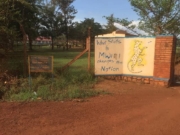
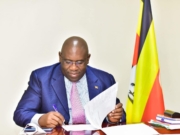
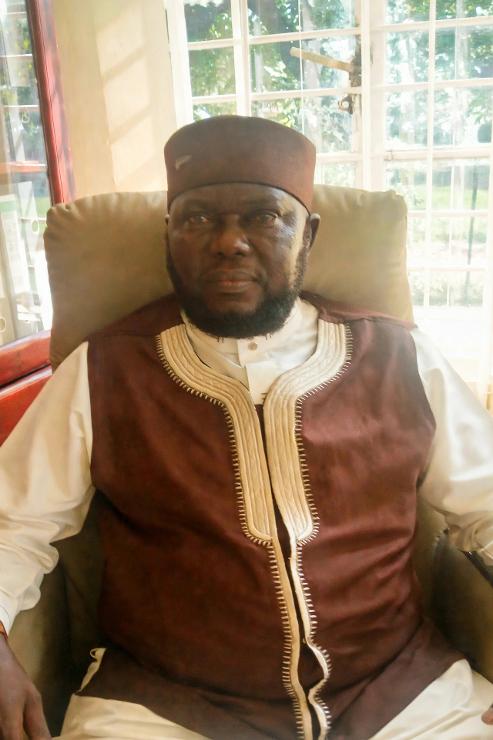
The announcement was made by Jinja District Khadi, Sheikh Ismail Ada Basoga, during an exclusive interview with The Exposure Uganda at his renovated office at Mvule Crescent, the same ground that will host the gathering.
From Lubas Road To A Home At Mvule Crescent.
The office itself tells part of the story of the district. For years, Jinja Muslims hired a small room along Lubas Road to serve as their district office, a room that was squeezed, noisy and difficult to use for any serious conversation.
People came there for guidance on marriage, family disputes and religious matters, but they found little privacy and little dignity in the place that was supposed to represent them. Sheikh Basoga says he understood the problem the moment he stepped into the office, because the noise from the road made listening difficult and the size made it hard to receive visitors with the respect they deserved.
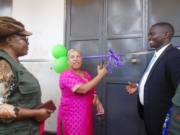
He took a radical and strategic decision to move the office to Mvule Crescent. The new office has since been renovated and refurbished into a spacious, quiet and welcoming space where elders can sit and talk, youth can ask questions, women can seek advice in confidence, and visitors from other districts can find the leadership with ease.


The community now calls the place a home, not just an office, and Sheikh Basoga says the move was about respect for the community rather than about luxury.
What Darusu Means.
‘Darusu’ is a word that many non-Muslims hear but few fully understand. It is the plural of ‘Darasa’, which in school means a lesson, and in Islam means a teaching session where a Sheikh explains what the Quran and Hadith say about belief, worship, family and daily life.
One Darasa is one lesson, while Darusu is many lessons, and Mega Darusu therefore means a large gathering where many Sheikhs teach many lessons to many people in one day. That is what will happen in Jinja, where the programme will not be a short sermon but a full day of teaching from morning to evening.
Why Unity Is The Theme.
Sheikh Basoga says the theme was chosen deliberately because it speaks directly to the reality of Jinja Muslim District, which covers Greater Jinja. Muslims in the district pray in different mosques, follow different Sheikhs and belong to different groups and sects, a division that has weakened the community and made joint planning, support for orphans and widows, and school building more difficult.
The theme points to the two worlds that Islam teaches about. The first is Duniya, this life, with school fees, rent, business and family responsibilities, while the second is Akhirah, the life after death, where each person will answer for what they did in this life.
Sheikh Basoga says a Muslim must seek happiness in both worlds, because a person cannot neglect family and community here and still expect mercy there, just as a person cannot chase only this world and forget accountability in the next. His message is that Muslims in Jinja may differ in mosques and groups, but they worship one Allah, follow one Prophet and read one Quran, and unity can therefore bring happiness at home and before Allah, while division risks both.
Unity You Can Now See In Jinja.
Sheikh Basoga is quick to point out that unity is no longer just talk, and he credits the progress to the guidance of Allah and to regular engagements that have slowly steadied the followers. He remembers a time when division ran deep, when youth could not pray with elders in the same mosque, when people chose a mosque by group rather than by distance, and when many Muslims could not even greet one another.
That picture has changed. In the past, a Muslim would see another Muslim and look away, unwilling to say Asalam Alaykum because of petty differences, yet today, when Muslims meet, they greet each other loudly and happily, often in chorus.
The greeting itself carries deep meaning. Asalam Alaykum means peace be upon you, while the full form, As-salamu Alaykum Wa Rahmatullahi Wa Barakatuh, means peace be upon you, and the mercy of Allah and His blessings. It is more than a casual hello, because it is both a prayer and a promise, in which the speaker says the other person is safe from his tongue and his hand.
The reply, Wa Alaykum As-salam Wa Rahmatullahi Wa Barakatuh, means and upon you be peace, and the mercy of Allah and His blessings. Sheikh Basoga uses the greeting as a test, because when Muslims stop greeting each other, the heart is broken, and when they greet each other again, the heart has healed.
He admits the work is not finished, because conflicts will remain due to human nature, politics, money and leadership ambitions. But Jinja Muslims have agreed on one thing, that faith is paramount, that faith is bigger than differences, and that faith is bigger than any individual.
They can disagree on small issues, hold different views and compete for leadership, but they will not allow those disagreements to stop them from praying together, greeting each other and learning together as one Ummah.
A Leadership Born In Tension.
To understand Sheikh Basoga, it helps to go back to 2020, the year he became Khadi. His rise followed weeks and months of tension, because the seat had become envious and contentious, and key players fought over it in a contest that left wounds and broken friendships.
He found a divided house, where Imams were not talking to each other, mosque committees distrusted the district leadership, young people did not know who to follow, and ordinary Muslims were tired of wrangles. He chose a different path, and he decided he would not heal Jinja through revenge or through attacks on rivals, but through teaching, by returning to Darasa and reminding people that leadership in Islam is a trust from Allah rather than a prize to fight over.
Mega Darusu grew from that choice. The first edition brought people together, the second brought more, and the third is now expected to draw crowds from Kamuli, Iganga, Mayuge, Bugiri, Luuka, Buyende, Namutumba, Kaliro, Jinja City and Jinja District, together with visitors from Kampala.
What Will Be Taught On The Day.
The programme covers the daily life of a Muslim. Teachers will handle Tawhid, belief in the Oneness of Allah, Fiqh, how to perform wudhu, Swalah, fasting, Zakat and Hajj correctly and with understanding, and Akhlaq, character, how to speak truthfully, keep promises, respect parents, love a spouse and raise children with care and discipline.
They will also teach on family, marriage, youth discipline, leadership and the role of Muslims in building a peaceful Uganda. The speakers include Sheikh Luutu Sulaiman Wandera, the main speaker, Imam Ahmed Kyeyune, Sheikh Hamza Kayiira, Sheikh Shafiq Mafu, Sheikh Burhan Byerimba and Sheikh Omar Mapo, all hosted by Sheikh Basoga.
He has asked all Imams, Sheikhs, women leaders, youth leaders and ordinary Muslims to attend as students, not spectators, to ask questions and to go home with answers for their homes, marriages and businesses. The event also matters for Jinja City, because hotels, restaurants, transport operators and market vendors will benefit from the visitors.
Warning For the Long Holiday: A National Crisis Hitting Home.
The tone of the interview changed when Sheikh Basoga spoke about the long holiday. UCE and PLE candidates are already back home, UACE candidates will soon join them, and thousands of children are now home, many idle, while parents work in gardens, shops and offices.
Sheikh Basoga warned men who think money gives them a right to exploit school girls. Some give a girl 5,000 shillings, 10,000 shillings, a phone, a chapati or a soda, and believe they have bought her future, yet he called that foolishness rather than manhood.
He said silence from parents or poverty in a home is not permission. Defilement is a sin before Allah and a crime under Ugandan law, and it carries heavy penalties, including prison. Money and influence cannot shield a man who harms a child, because every act returns to the person who did it, often through his own family.
His warning is not abstract. It sits inside a dropout and teenage pregnancy crisis that Uganda is now openly calling a national emergency, and Busoga is among the worst hit regions.
The numbers tell the story. In the latest PLE cohort, more than 1.7 million pupils enrolled for P1 in 2019, yet the Uganda National Examinations Board registered only 920,833 candidates, or 53.8 percent of those who started, for the exams that began this month. A separate analysis of the 2017 cohort found that 2,070,455 pupils started P1, but only a little over 900,000 sat PLE this year, meaning about 1,149,622 children dropped off along the way. Over the last 30 years, more than 12.4 million children have dropped out before P7, according to an analysis of Ministry of Education enrolment figures and UNEB registration data.
To explain his point, he told a story from the time of Prophet Muhammad, (peace be upon him), recorded in the books of Hadith and narrated by Abu Umamah al-Bahili.
People often ask who the boy was, but the Hadith gives no name, and it describes him only as a young man, a shabb in Arabic, an ordinary youth from Quraysh who came to the Prophet and asked for permission to commit zina, fornication.
The companions were shocked and wanted to chase him away, but the Prophet did not chase him. He called him closer, made him sit down, and asked him whether he would like it for his mother, his daughter, his sister and his aunt. The boy answered no to each question, and the Prophet told him that other people feel the same about their mothers, daughters, sisters and aunts.
The Prophet then placed his hand on the boy’s chest and prayed, O Allah, forgive his sin, purify his heart and guard his chastity. The narrator says the boy left changed, and after that day, there was nothing he hated more than zina.
Sheikh Basoga says the story speaks to Jinja today, because the girl a man sees in a trading centre is someone’s daughter and someone’s sister, and if another man did the same to his own daughter, he would not celebrate, but would be angry.
He asked parents to stay alert, to know where their children sleep, who they move with, who gives them money and what they do on phones. He asked them to talk openly about defilement, teenage pregnancy, HIV and school dropout, and to build homes where a child can report a man who approaches her without fear of beating or blame.
He asked boda-boda motorists, shopkeepers, bar owners and lodge/guest house operators not to help these men, not to rent rooms to men who bring young girls, not to sell alcohol to minors, and not to look away. Such cases should be reported to parents, local leaders, police and religious leaders, because protecting children is the duty of the whole community.
He urged school girls to value their education and to understand that their bodies are a trust from Allah. They should avoid risky places and avoid gifts from men who want something in return, because a man who truly loves a girl will wait for her to finish school, approach her parents with respect and marry her honorably, while a man who wants her for a few minutes does not love her.
He urged young men to learn from the story, to understand that desire is natural but must be controlled, and to put their energy into education, work, sports, business and worship. They should respect other people’s daughters as they want their own sisters and daughters to be respected.
As a final call, Sheikh Basoga closed with an invitation for Muslims to come and learn, to come and unite, and to come and be strengthened. Jinja, he said, can show Uganda that Muslims can sit together, learn together and live together.