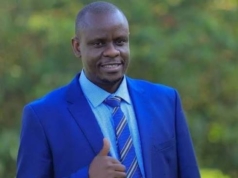

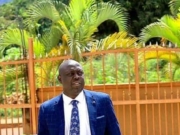


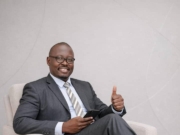


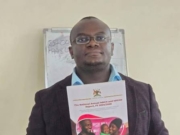
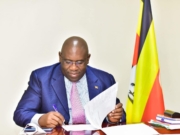


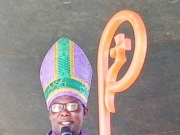
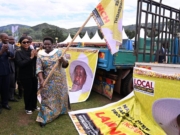
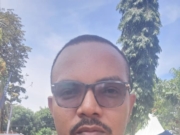

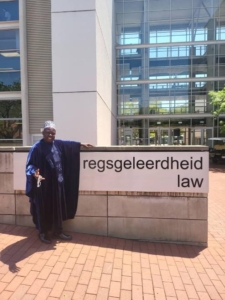
Uganda’s Prof. Isaac Christopher Lubogo went to Pretoria with a complaint many in the hall already knew from their own lives, but had not heard stated so plainly. Africa has the laws. What Africa does not yet have is the daily practice that makes those laws mean something in ordinary life.
The address came at the 14th Annual Disability Rights in Africa Conference, held on 5-6 November 2026 at the Centre for Human Rights, University of Pretoria. The theme was Equality and Non-Discrimination: Realizing the Rights of Persons with Disabilities in Africa.
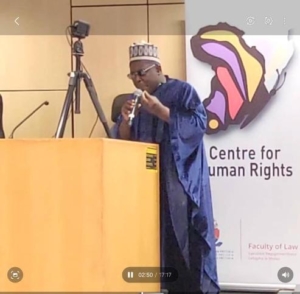
Judges, academics, activists, policymakers and persons with disabilities from across the continent filled the room. The occasion was not used to list treaties. The question placed before the audience was sharper: what have those treaties changed on the ground for people who live with disability every day?
The starting point was simple. A person can be recognized by the Constitution and still be shut out of the classroom, the office, the taxi, the court and the community meeting. That gap between legal status and daily life became the thread running through the whole presentation.
How The Argument Was Carried.
To carry that message across difficult ground, legal jargon alone would not have been enough. Literary tools were used the way a careful driver uses a strong vehicle on a bad road, because the politics of disability in Africa is full of potholes, diversions and unpaved stretches where a technical argument alone will break down. Antithesis, repetition, rhetorical questions, parable and proverb allowed the argument to move quickly and safely from philosophy to law, from law to budget, and from budget to the human being waiting outside the building.
The point landed because the audience could test it against their own countries. In Kampala, Nairobi, Accra, Lagos, Pretoria, Lusaka, Harare and Dar es Salaam, the statutes look strong, while the buildings, the budgets and the attitudes often do not. Africa, the argument insisted, should stop measuring progress by how many laws have been passed, and start measuring it by whether a person with a disability can enter a public building, get a job, learn, get treatment and take part in decisions without a struggle.
That shift from paper to practice shaped the delivery. Those present describe a presentation that was slow and deliberate, with pauses that allowed each point to settle. A phrase was repeated until it settled, and the line of argument moved between law, philosophy and lived experience without breaking. The voice dropped when humiliation was described and rose when dignity was described. There was no shouting and no pleading, because the audience was kept returning to one question: if the right exists, why does the person still have to fight for it?
A large part of that effect came from antithesis, the art of placing a claim next to its opposite so the contrast cannot be missed. A person is present in law but absent in life, visible in documents but invisible in decisions, and a citizen on paper but a stranger in practice. The method worked because the opening half was true, since Africa does have constitutions and Acts, while the closing half forced the room to face what those documents have not delivered. The contrast was not decoration. It was the argument itself.
A Story About Existence.
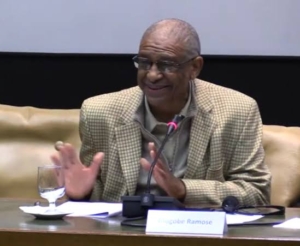
The opening came from a story rather than a statute, borrowed from the South African philosopher Professor Mogobe Bernard Ramose, who as a child listened to his mother talk about the men who had wanted to marry her before she married his father. The boy began to wonder what would have happened if his mother had chosen differently, and what chain of choices and chances had made his own life possible.
That childhood wonder was turned toward disability. The question, the presentation argued, is not only whether a person exists, but what kind of existence society offers that person after birth. A person can be counted in a census and left out of a budget, mentioned in a constitution and left out of a classroom, invited to a consultation and ignored in the decision. The physical fact of being alive does not settle whether a person is allowed to live with dignity.
For context, Prof Magobe Bernard Ramose is a South African philosopher, one of the key thinkers who have popularized African philosophy and specifically Ubuntu philosophy, internationally. He is the professor of philosophy at the University of South Africa in Pretoria.
From that story came a distinction that stayed with the audience. A person can be legally recognized and still experience a form of social non-existence, because the law says the person belongs while the school, the workplace and the meeting say otherwise. The hall was asked to sit with that contradiction before moving to solutions, because any solution that ignores it will only produce another law that looks good on paper.
Humanity Is Not Negotiable.
The next claim followed directly. Persons with disabilities do not need society’s permission to be human, because their humanity is not granted by Parliament, by a court, by a charity or by a community meeting. It is inherent and cannot be taken away by administrative delay. What society must do is organize its institutions, relationships and laws in a way that respects that humanity in practice.
Here the language of maxims took over, because maxims travel where long definitions cannot. The old Roman axiom was recalled: Ubi jus ibi remedium, where there is a right, there must be a remedy. A right without a remedy is a proverb without a practice.
The English maxim that has guided courts for centuries was also invoked: justice delayed is justice denied. A quota published late, a ramp promised for next year, a sign language interpreter who never arrives, all belong to the same family of delay. The delay was answered with a mantra, repeated until the hall could carry it home: Humanity is not negotiable under any law.
That sounds obvious until it is tested against daily life. In much of Africa, a person with a disability still has to negotiate entry into a building, a seat in a taxi, a job interview, a hearing in court, a marriage, and the right to be treated as an adult rather than a perpetual child. No other group is asked to negotiate so hard for what the Constitution already promises without condition.
The pressure in this part of the speech came from anaphora, the deliberate return to a single verb until its weight could be felt. To beg for a ramp, to beg for a job, to beg for a classroom: the repetition was not accidental, but a device for making the audience hear how a rights-holder is reduced to a supplicant in everyday encounters, and for exposing the indignity of a system that turns entitlement into supplication.
Once that pressure had built, the release came in a declaration that reset the terms of debate, namely that humanity is not negotiable under any law, and the burden was then shifted with equal clarity, because it is not persons with disabilities who must prove they deserve to belong, but society that must prove it is removing the barriers it built.
Ubuntu As Law, Not Slogan.
If humanity is not negotiable, what philosophy should guide the law? For Lubogo, the answer is already African, and it is Ubuntu.
Ubuntu is often summed up in the maxim umuntu ngumuntu ngabantu, a person is a person through other persons. In public life it has been used so often in speeches, brochures and political rhetoric that it risks becoming empty, and the argument made in Pretoria was that Africa has wasted its most powerful philosophical resource by treating Ubuntu as a slogan for kindness, instead of using it as a legal principle with real consequences.
The reading offered was direct and practical. Human identity, dignity and personhood are formed through relationships, mutual recognition and shared responsibility. If I am a person through other persons, then my dignity depends on how you treat me, my belonging depends on whether you make room for me, and my humanity is not complete if you exclude me from common life.
That reading fits the social model of disability. That model does not treat disability only as a medical problem inside a person’s body, because it looks at how inaccessible environments, discriminatory attitudes, institutional practices and social arrangements create exclusion. Put the two together and the conclusion is clear. A society that systematically excludes persons with disabilities is not just being unkind. It is failing in its basic duty to recognize the humanity of all its members.
For that reason, Ubuntu should become an interpretive principle for legislation, judicial decisions, public policy and institutional conduct. It should not replace the Convention on the Rights of Persons with Disabilities, the CRPD, or the African Disability Protocol.
It should strengthen how Africa interprets and applies them, and it should give African judges an African language for universal rights, while giving African legislators an African philosophy for African solutions. Africa does not need to import dignity. It needs to apply the dignity it already claims in its own traditions.
The claim was grounded in African wisdom as well as in law. The hall was reminded of the saying that a single hand cannot nurse a child, and of the proverb that when spiders unite, they can tie up a lion. Both sayings carry the same Ubuntu logic: personhood is collective work.
They were paired with the legal axiom that the law must follow the person, not the file, because a file can be closed while a person is still waiting outside. The proverbs were not ornaments. They were bridges over the potholes of technical language, allowing judges, chiefs, teachers and activists to meet on the same road.
The point was made concrete through cases where Ubuntu has already shaped South African law. In S v Makwanyane (1995), Ubuntu featured in the Constitutional Court’s reasoning on human dignity and the rejection of the death penalty. In it informed a humane approach to eviction. In Dikoko v Mokhatla and Everfresh Market Virginia v Shoprite, it informed discussions on reconciliation, good faith and relationships.
If Ubuntu can be used to abolish the death penalty and to humanize evictions, the question followed, why can it not be used to order a school to build a ramp, to order an employer to provide reasonable accommodation, and to strike down laws that use degrading language?
What The Law Already Says.
That test matters because the legal architecture is already in place. The CRPD was adopted in 2006 and entered into force in 2008. It is built around dignity, equality, accessibility, participation and non-discrimination, with Article 5 specifically guaranteeing equality and non-discrimination.
In 2018, the UN Committee issued General Comment No. 6, which set out inclusive equality through four linked dimensions: redistribution, recognition, participation and accommodation. It addressed not only direct discrimination, but also structural disadvantage, harmful stereotypes, exclusion from decision-making and the denial of reasonable accommodation.
At continental level, the African Union adopted the African Disability Protocol on 29 January 2018. It entered into force on 3 May 2024 after the fifteenth ratification. Uganda is among the states that have ratified it.
The Protocol responds to disability challenges within African social, cultural, legal and institutional contexts, including harmful practices, customary law, access to justice, and the recognition of persons with disabilities as both rights-holders and duty-bearers.
These are real gains, and they came from decades of work by activists, lawyers, organizations of persons with disabilities and their allies. The warning from Pretoria was that celebration without implementation is dangerous, because it creates the appearance of progress while daily life stays the same for the people the laws were meant to serve.
A July 2026 UNDP policy brief made the same point from a different angle. Despite the Protocol’s entry into force, most African Union member states had yet to ratify it. The brief also pointed to the economic cost of exclusion, estimating potential losses of between 3 and 7 per cent of GDP when persons with disabilities are shut out of labour markets. Exclusion, in that reading, is not only a rights violation. It is also economic self-harm for the whole continent. A ramp costs a fraction of a building, an interpreter costs a fraction of a meeting, and a Braille textbook costs a fraction of an education budget. Here another old maxim did useful work: prevention is better than cure, and a small accommodation today prevents a large injustice tomorrow.
Uganda: Promise And Gap.
From the continent, the lens turned to Uganda, and the picture drawn was both hopeful and troubling. Article 35 of the Constitution recognizes the rights of persons with disabilities and places an obligation on society and the state to take appropriate measures to ensure they realize their full potential. Article 78 provides for their representation in Parliament, which gives them a formal voice in law-making.
The Persons with Disabilities Act, 2020 added further protection. Section 9 prohibits discrimination in employment, requires employers to provide reasonable accommodation where necessary, and provides tax deductions of up to 10 per cent on chargeable income for qualifying employers employing persons with disabilities.
Section 9(6) then requires the responsible Minister, in consultation with the National Council for Persons with Disabilities and employers’ organizations, to determine the employment quota and publish it through a statutory instrument at least once every two years.
At the time the presentation was prepared, the statutory instrument needed to make that quota work had not been identified. The point was presented not as an attack, but as an accountability question, because a quota that is never published is not a quota, but a promise deferred, and a right delayed is a right denied in practice.
The employment data underline the point and give it a human weight. An ILO assessment referencing Uganda’s 2020 disability situation analysis reported that only 34 per cent of young men and 30 per cent of young women with disabilities were employed, compared with 53 per cent and 40 per cent respectively among young men and women without disabilities. These are not just figures on a page, because they are young Ugandans who went to school, qualified, applied, were interviewed and were rejected, not because they lacked ability, but because the system lacked accommodation.
The audience was asked to test Uganda’s promise against its buildings. How many schools have accessible classrooms, accessible toilets, sign language interpreters, Braille materials or teachers trained in inclusive education? How many district headquarters, hospitals, courts and police stations can a person using a wheelchair enter without being carried? How many roads, taxis, markets, churches and mosques were built with persons with disabilities in mind? Those questions were left unanswered, because the silence that followed was part of the method. This was Socratic questioning, the art of asking a cascade of questions until the listener convicts himself with his own answers.
Courts: Declaration Without Delivery.
The same gap appears in the courts, where law often stops at declaration. Purohit and Moore v The Gambia (2003) was examined, in which the African Commission addressed the treatment and indefinite detention of persons with mental disabilities under The Gambia’s Lunatics Detention Act. It was an important affirmation of rights and dignity, but a progressive decision does not automatically dismantle the institutions that caused the exclusion. A judgment that is not implemented is a declaration without delivery, and justice on paper becomes injustice in practice for the person still locked out.
A similar point was made about Uganda through CEHURD v Attorney General (2015), where the Constitutional Court addressed degrading statutory language relating to persons with disabilities. The case was presented as an illustration of dignity and recognition in judicial reasoning, with the careful clarification that it was not expressly framed as Ubuntu jurisprudence, and the discussion was then linked to litigation concerning inaccessible public buildings, where the argument of limited resources is often raised by the state as a defense for continued exclusion.
On that argument the position was blunt and unwilling to accept delay as a defense. Resource constraints are real and budgets are limited, but they cannot become a permanent excuse for exclusion. A government that can find money for a new highway, a new stadium and a new office block cannot claim it has no money for a ramp.
A government that can find money for workshops, travel and allowances cannot claim it has no money for sign language interpreters. When resource constraints are used to justify indefinite exclusion, they stop being an explanation and become discrimination under another name. The principle was summed up with the maxim: what the law promises, the budget must prove, because a budget is a moral document written in numbers.
The Ubuntu-Inclusive Equality Model.
From critique, the presentation moved to construction, and the main contribution was the Ubuntu-Inclusive Equality Model, which links African philosophy to the practical obligations in the CRPD and the African Disability Protocol. The model was refused a dry checklist form, because it was presented as a living web where each strand holds the others.
Redistribution, in this telling, is not charity but duty. Resources, accessible infrastructure, inclusive education, employment opportunities, assistive technologies and support services are not favours a generous state hands out. Under Ubuntu, they are what a community owes its members if every person is to take part meaningfully. A society that builds a school without a ramp has not just made a design error, because it has broken a communal obligation to its own children.
That duty only makes sense when it is tied to recognition, which must go beyond admitting that persons with disabilities exist and must confront stigma, discrimination, paternalism and harmful stereotypes while respecting dignity, individuality and autonomy in the same breath.
Recognition, as developed in Pretoria, means seeing persons with disabilities as individuals with aspirations, abilities, choices and contributions, rather than as objects of pity, burdens, perpetual recipients of aid, or problems to be solved, and it means understanding that they are not “the disabled” but persons who happen to be teachers, lawyers, farmers, traders, mothers, fathers, students and leaders, for whom disability is part of experience rather than the whole of identity, so that when you look at a person with a disability, you see a person first and always.
Recognition without participation, however, turns into performance. Persons with disabilities must not merely be beneficiaries of policies designed by others, because they must actively take part in shaping decisions that affect their lives, including representation in governance, public consultations, legislative processes, institutional leadership and community decision-making. Nothing about us, without us, is not a slogan, because it is a precondition of legitimacy.
A policy drafted without persons with disabilities is illegitimate, no matter how well-intentioned. A building designed without consulting them will be inaccessible, no matter how modern. A court decision made without hearing them will be incomplete, no matter how learned.
Holding the web together is accommodation as a reciprocal duty. Reasonable accommodation should not be treated as a special favor or an inconvenience that persons with disabilities must repeatedly justify. It should be recognized as an essential condition of equal membership, and schools, workplaces, public institutions and service providers must organize their environments to accommodate human differences. When a school provides Braille, it is not doing a favor, because it is fulfilling a duty. When an employer provides a screen reader, it is not being generous, because it is being just. When a court provides a sign language interpreter, it is not being kind, because it is being lawful.
Accommodation is not an extra, because it is equality in action. The insistence throughout was that the strands cannot be separated. Without redistribution, recognition is empty, without recognition, participation is tokenistic, and without participation, accommodation is misdirected.
Ubuntu Must Protect Autonomy.
A warning was then added that prevented the model from becoming sentimental. Ubuntu must never be used to override individual rights, justify paternalism, legitimize harmful cultural practices or deny persons with disabilities their legal capacity. This matters in societies where family, clan, elders and community leaders exercise real influence over personal decisions. In many African communities, decisions about where a person with a disability will live, whether they will go to school, whether they will marry, whether they will work and how their money will be used are made by others, often with good intentions, but often without the person’s consent.
Genuine Ubuntu, the argument ran, must respect the autonomy, will and preferences of the individual. Community responsibility should strengthen personal agency, not replace it. That position fits the CRPD’s emphasis on equal recognition before the law under Article 12 and the importance of supported decision-making. Ubuntu should not become an excuse for deciding on behalf of persons with disabilities, because it should provide a foundation for ensuring they are supported to make and take part in decisions about their own lives. Ubuntu without autonomy is not Ubuntu at all, because it is control dressed in cultural clothing. True Ubuntu liberates rather than imprisons, and it expands freedom rather than narrowing it.
That section drew quiet recognition in the hall, particularly from activists who have fought paternalism inside families as much as discrimination outside them. It was the presentation at its most careful, defending African philosophy while refusing to let it be used as a shield for abuse within the home.
What Africa Must Do Next.
From that warning the lens widened again to the continent. Ghana and Kenya were pointed to as examples of the same pattern. Ghana has a Persons with Disability Act. Kenya has a constitution that guarantees disability rights. South Africa has a White Paper on the Rights of Persons with Disabilities. Yet in all three, persons with disabilities still face inaccessible transport, unemployment, stigma and exclusion. The pattern is continental and the failure is systemic, not accidental.
The conclusion from those examples was that disability inclusion cannot be achieved through legislation alone. It requires political commitment, financial resources, effective institutions, public accountability and a philosophy that treats inclusion as an obligation rather than generosity. From that diagnosis came priority interventions for Africa’s next decade. African legislatures must establish clear and workable implementation mechanisms, so statutory commitments do not remain dependent on discretionary administrative action. A law without a deadline is a wish, and a quota without a statutory instrument is a mirage that fools no one who needs it.
Courts and litigators should use Ubuntu as an interpretive principle when enforcing equality obligations. Judges must be willing to say exclusion is not just unlawful, because it is also un-African in the deepest sense. Law reform institutions should strengthen supported decision-making and move away from substitute decision-making that undermines autonomy. No one should lose legal capacity because they have a disability.
Organizations of persons with disabilities should engage customary and community authorities while safeguarding dignity, participation and autonomy. The conversation must happen in villages, clans, churches and mosques, not just in conference halls in Pretoria. The African Commission on Human and Peoples’ Rights should consider developing interpretive guidance on Ubuntu, the African Disability Protocol and communal responsibility, including recognition of persons with disabilities as duty-bearers, not just recipients, but contributors, leaders and decision-makers in their own communities.
The Citizenship Test.
Behind those proposals sits a wider message about citizenship. A person may have the right to education but remain excluded by inaccessible classrooms. A person may possess professional qualifications but remain unemployed because recruitment systems and workplaces are designed without considering disability.
A person may have the right to take part in public affairs but remain unheard because public institutions fail to provide accessible communication. A person may have the right to health but remain untreated because hospitals have no accessible beds, no sign language interpreters and no staff trained to communicate with persons with intellectual disabilities. A person may have the right to justice but remain unheard because courts have no accessible entrances, no Braille judgments and no accommodations for persons with psychosocial disabilities.
These realities expose the limits of measuring equality by counting constitutional provisions, legislative reforms or policy declarations. For Lubogo, the true measure of a just society is not how many laws it has passed, because it is whether persons with disabilities can enter public institutions, access essential services, take part in decisions, pursue their aspirations and live without constantly having to defend their humanity.
That test applies beyond government and reaches into everyday institutions. A bank that builds a branch without a ramp is not just inaccessible, because it is telling persons with disabilities their money is not welcome. A school that refuses a child because of disability is not just discriminatory, because it is telling that child their future does not matter.
A church that has no sign language interpreter is not just unprepared, because it is telling Deaf congregants their worship does not count. These are not small omissions, because they are daily messages of exclusion that accumulate over a lifetime.
Parallelism was used here, the same sentence shape repeated three times, to make the moral arithmetic unavoidable. The bank, the school, the church. The money, the future, the worship. The device carried the argument faster than any statistic could, because it moved the audience from institution to institution without losing speed on the rough road of policy debate.
The audience was not left with despair, because the close offered a programme that moved from institution to institution, refusing to let any sector hide behind another. Parliaments were called upon to publish the quotas, pass the regulations, set the deadlines, allocate the budgets and hold ministers accountable when they fail.
Courts were called upon to be courageous, to use Ubuntu, to order implementation, to refuse to accept resource constraints as a permanent excuse for discrimination, and to remember that justice delayed is justice denied for the person waiting outside. Employers were urged to stop seeing disability as a risk and start seeing ability as an asset, to provide reasonable accommodation without being begged, and to recruit on merit and not on prejudice. Schools, hospitals and public institutions were urged to audit their buildings, policies and attitudes, and to ask whether a person with a disability can enter, take part and thrive there.
Communities, families and traditional leaders were called upon to stop making decisions for persons with disabilities and to start making decisions with them, to listen, to respect autonomy, to reject harmful practices and to embrace the true meaning of Ubuntu. Persons with disabilities themselves were called upon to claim their space, to organise, to litigate, to advocate, to lead and to refuse to accept that belonging is a favour to be begged for. Belonging is a right to be claimed by every citizen without apology.
Postscript From Old Trafford, Two Days Later.
The conference closed on 6 November. Two days later, on Sunday 8 November, many of those same delegates were watching a very different kind of public theatre at Old Trafford, where a surprisingly struggling Manchester United hosted a fired-up Aston Villa. The timing matters, because the football did not interrupt the message from Pretoria. It confirmed it, after the fact, in a language everyone understands.
Villa scored twice inside four minutes, United fought back to 2-2, Villa went 4-2 up, and United somehow rescued a 4-4 draw with two goals in stoppage time from Joshua Zirkzee and Patrick Dorgu. The draw left United in the bottom three heading into the international break.
The humour was not lost on the Pretoria delegates who follow football. United’s defence, they joked, was like a building without a ramp: everybody could see the entrance, nobody could get through it safely, and the manager kept insisting the plan was working. Michael Carrick, who said “we’re making it hard for ourselves” and “we never give up,” sounded like a government spokesperson explaining why a disability law passed ten years ago still has no regulations. Villa fans taunted him, while some United fans had already left early after an anti-ownership protest, only to miss the comeback.
The joke, if Lubogo had told it, would then have been turned back on the room. United, the punchline would run, at least got a second half. Persons with disabilities are still waiting for the first half to start. A football team can concede twice in four minutes and still be given another chance. A wheelchair user denied a ramp is told to wait for the next budget, the next term, the next government. The difference is that Carrick gets 90 minutes to fix his mistakes. Many citizens get a lifetime of excuses.
Conclusion: Move Your Feet.
The presentation brings together constitutional law, international human rights standards, African regional instruments and indigenous philosophy. Its central claim is that Ubuntu should not merely decorate existing human rights instruments with African cultural language. It should help strengthen their interpretation and ensure their promises are reflected in the daily experiences of persons with disabilities across the continent.
The challenge, therefore, is not simply to enact more laws or produce more policy documents. It is to build societies in which accessibility is normal, participation is meaningful, accommodation is expected, dignity is respected and exclusion is actively challenged by institutions and citizens alike.
Belonging must not depend on usefulness, participation must not depend on permission, equality must not depend on repeated pleading, and rights must not remain hostage to indefinite postponement. A person with a disability does not need society’s permission to be human, because that humanity already exists and cannot be granted by office or title.
The responsibility of society is to organize itself in a way that respects, protects and gives practical effect to that humanity. That is the promise of Ubuntu jurisprudence and the challenge placed before Africa’s governments, courts, institutions and communities.
The question that remains is not whether Africa has the laws, because it has them in abundance. The question is not whether Africa has the philosophy, because it has it in Ubuntu. The question is whether Africa has the will to act on what it already knows. Lubogo believes it does, but will must be proven not in Pretoria conference halls, but in Ugandan classrooms, offices and health centres, in Accra markets and in Kenyan matatus, in every place where a person with a disability still has to fight to belong.
As the old African saying warns, when you pray, move your feet. Africa has prayed in its constitutions. It has prayed in its protocols. The time has come to move its feet, to build the ramp, to hire the interpreter, to publish the quota, and to open the door. For as another proverb reminds us, a child who is not embraced by the village will burn it down to feel its warmth, and Africa cannot afford to leave any of its children outside in the cold.
TEU Editor’s Note: This article is based on Lubogo’s conference presentation delivered at the 14th Annual Disability Rights in Africa Conference, University of Pretoria, 5-6 November 2026, with context from the University of Pretoria conference programme, UN CRPD General Comment No. 6 (2018), Uganda’s Persons with Disabilities Act, 2020 (Section 9), the UNDP July 2026 policy brief on the African Disability Protocol, and ILO observations on disability employment in Uganda.