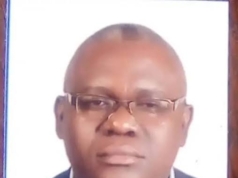

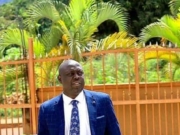

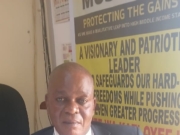



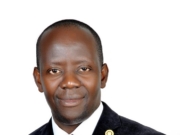




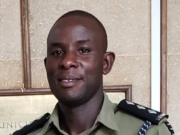

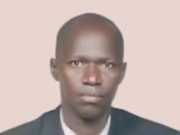

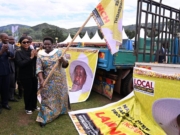

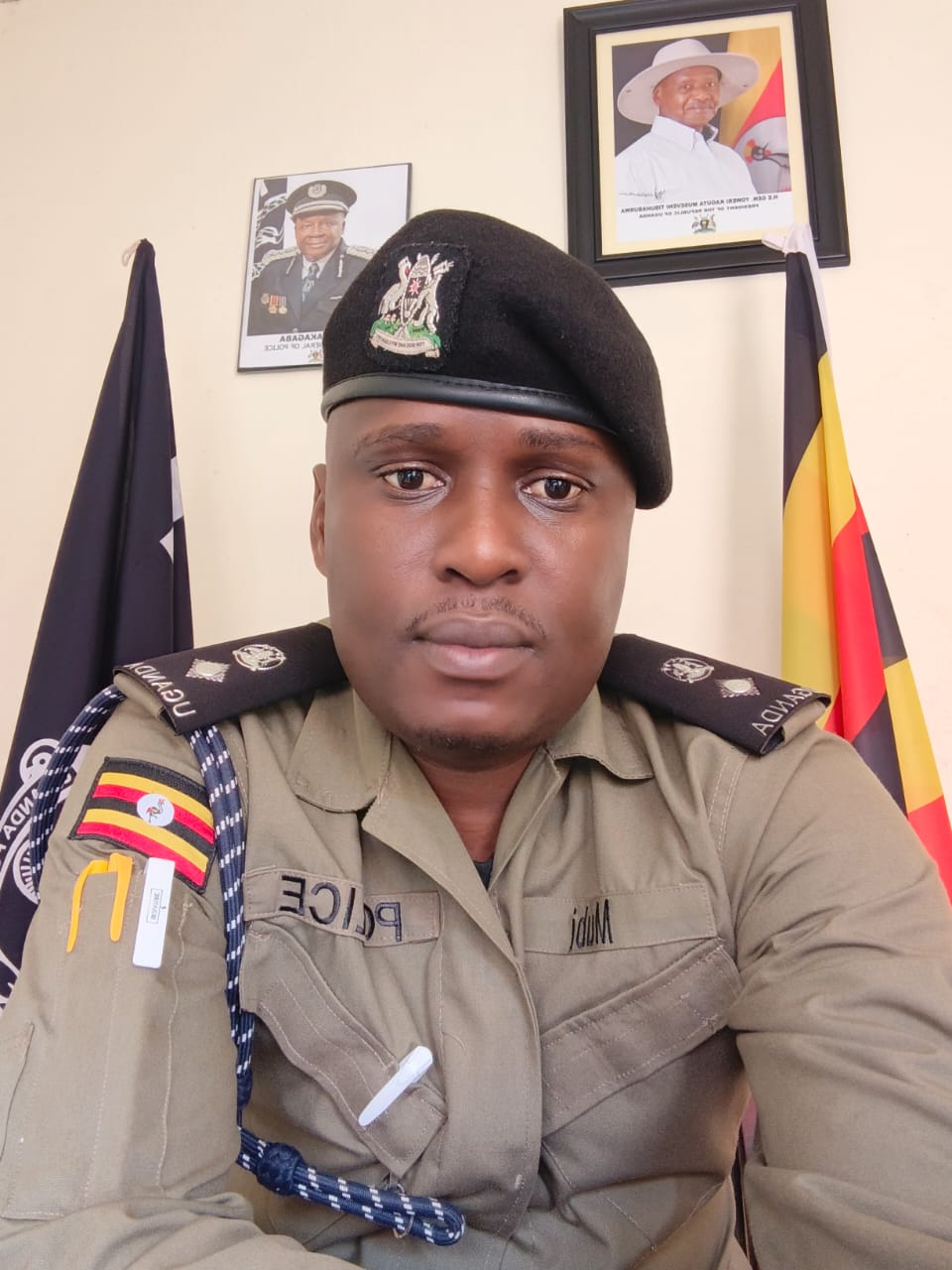
Kiira Region PRO SP James Mubi as Seen Through the Eyes of Ssali Moses.
There is an old African proverb that says, “When you drink from the well, remember the one who dug it,” yet in today’s world, we drink, we walk away, and we forget the hands that dug the well, because appreciation has become the rarest currency in a world that knows how to demand, how to complain, and how to criticize, but has almost forgotten how to say a simple, honest thank you.
It is no longer just Uganda that is thankless; it has become a thankless world, a world where nurses are abused after saving lives, where teachers are insulted after raising children, where parents are abandoned after sacrificing their youth, where soldiers return home to silence, and where good people are celebrated only when they are gone.

As Maya Angelou wisely warned when she said, “People will forget what you said, people will forget what you did, but people will never forget how you made them feel,” and yet even that feeling is rarely repaid with gratitude while a person is still alive to feel it.
In Uganda, we have perfected this disease, for we clap for people when they are dead, we praise them at funerals with tears that would have meant more at their birthdays, we write long tributes when they can no longer read them, and we wait until retirement, until sickness, until the grave, to say what we should have said while they were still serving, still struggling, still standing in the gap for us.
At Home, The Same Disease.
And nowhere is this thanklessness more visible than in our own homes, for we have 90 percent of men who will shower barmaids and waitresses with a million thank-you compliments and generous tips for a single plate of food served with a smile, yet at home, those same men become more like a breastfeeding lioness guarding her cubs — fierce, impatient, ready to roar at the slightest disturbance, and without even an iota of appreciation for the daily, endless chores their wives do at home.
The barmaid is thanked for serving one meal, but the wife who wakes up at 5am to sweep, to cook, to wash, to iron, to bathe the children, to nurse the sick, to prepare the husband for work, and to keep the home standing through power cuts, water shortages, and empty pockets, is never thanked, as if her labour is not labour, as if her sacrifice is not sacrifice, as if her love is a duty that needs no gratitude.
As the wise say, “We often value the stranger’s smile more than the family’s sacrifice,” and that is why many women in Uganda die slowly, not from disease, but from being unseen, for they cook for men who never say thank you, they clean for children who never say thank you, and they carry homes that never say thank you, while their husbands reserve all their compliments, all their laughter, and all their tips for women they will never marry.
It is the same thankless spirit that has infected the whole world, for we appreciate the waitress who serves us for five minutes, but we ignore the wife who serves us for a lifetime, and we appreciate the stranger who smiles at us in the bar, but we despise the mother who prays for us at home, proving the painful proverb that “Familiarity breeds contempt.”
If a man cannot say thank you to the woman who cooks his food every day, how will he say thank you to a police officer, to a teacher, to a nurse, or to a neighbour? If gratitude dies at home, it dies everywhere.
That is why what is about to happen in Jinja is not just about police, it is about healing a nation that has forgotten how to be grateful, starting from the kitchen, to the station, to the nation.
Who Is This Ssali Moses? — Before We Go Further, Let Us Introduce Him Properly.
Many readers may be asking: who is this man who is appreciating a police spokesperson? Why should we listen to him? What has he done to earn the right to speak?
Let us introduce him properly, because his story is the reason his words carry weight. Ssali Moses is not a police officer. He is a civilian. He is an author of 19 books. He is a writer, a thinker, and a volunteer who has given ten full years of his life — without salary, without title, without uniform — to a work called UPF Morale & Mindset, a work that seeks to build the heart, the mind, and the morale of the men and women in the Uganda Police Force.
For ten years, Ssali has moved, on foot, on boda boda, on his own money, across all police stations under OPS 176/214/01, sitting with officers in small rooms, in dusty compounds, in parade grounds, listening to their frustrations, their fears, their family problems, their low pay, their long hours, and their broken spirits, and speaking to them about discipline, purpose, hope, mental strength, and the dignity of serving a nation that rarely says thank you.
He did not start this work when it was popular. He started it when many officers did not understand it, when many commanders looked at him with suspicion, and when many asked what a civilian was doing talking to police about morale, as if morale was not a human need.
He has written 19 books out of that journey, books born not in a comfortable office, but in police stations, in conversations, in tears, and in prayers, and for ten years he has remained faithful to that calling, even when he was ignored, even when he was doubted, and even when he had to fund his own movement from station to station.
So, when Ssali Moses speaks about a police officer, he is not speaking as an outsider who read about police in a newspaper, he is speaking as a man who has lived among officers for a decade, who has eaten with them, cried with them, prayed with them, and watched them at their best and at their worst, and that is why, when such a man stands up to appreciate an officer, Uganda must pause and listen, because he has seen what most Ugandans have never seen.
And Then, The Police Spokesperson.
And it becomes even more shocking, almost unbelievable, when the person being appreciated is a police officer, and it becomes a near-miracle when the person being appreciated is a police spokesperson, because in this country, and indeed in many countries, spokespersons or PROs carry a difficult reputation.
In deed many Ugandans have come to see them as professional defenders of the indefensible, as men who will stand before cameras and tell you that the white car you are seeing in front of you is actually maroon, that a man caught red-handed with a stolen car is not a thief but a suspect, and that investigations have begun, while asking you to remain calm when the community is burning.
Whether that perception is fair or not, it is real, and it is why Ugandans have learned to laugh, to doubt, and to scroll past whenever a PRO speaks, because the public has been disappointed too many times, trust has been broken too many times, and when a PRO speaks, many people no longer hear information but hear damage control, as the old saying goes, “Once bitten, twice shy.”
That is why what is happening in Jinja is a serious matter, and that is why it is news that this same Ssali Moses — the civilian volunteer of ten years, the author of 19 books, the man who has walked all police stations under OPS 176/214/01 — has stood up publicly to appreciate Afande SP James Mubi, the PRO Kiira Region, because in a thankless world, this is not a small thing, and in a cynical country, this is not normal, and when a man who has seen the inside of the Force for ten years appreciates a police spokesperson, you must stop and ask what this officer did differently to deserve what most officers never receive.
Even Football Fans Have Joined The Joke.
You could have heard the jokes from Ugandan football fans, who are still waiting for the Uganda Police Force mouthpiece, ACP Kituuma Rusoke, to confirm whether it is true that Manchester United is already in the relegation bracket — Manchester United, a team that boasts of dozens of trophies — because to them, the joke is simple: if it looks bad, call the Police spokesperson to tell you it is not bad.
They go as far as asking the former spokesperson, CP Fred Enanga, to issue a statement, or to go to Naguru Police Headquarters to assure Ugandans that what you are seeing around Man United is misinformation, and to them, Enanga had mastered the skill, for he could stand before the nation with a straight face and make the unbelievable sound believable, make a crisis sound like a rumour, and make what your eyes had seen sound like what your eyes had imagined.
The fans are joking, but as the wise say, “Behind every joke, there is a little truth,” and in Uganda, the office of the spokesperson has become, in the eyes of many, an office for managing perception rather than giving truth, and when people no longer believe what they see, they blame the man who told them not to believe their eyes, which is the heavy burden every PRO in Uganda carries today, whether he deserves it or not, and the dark shadow under which every police spokesperson must work.
And that is exactly why Ssali’s tribute to Mubi is so heavy, because it comes from a man who knows the jokes, who has heard the laughter, and who still chooses to say, “Not this one.”
Ssali Saw Him First In 2015.
Ssali did not meet Mubi yesterday, for he met him in 2015, at Mbale CPS, when Mubi was still a Cadet Officer, with no big office, no big title, and no reason to notice a young volunteer who had just started a strange journey called Morale and Mindset.
Ssali was just beginning his volunteer journey at that time, and many did not understand it, many asked what a civilian was doing moving from station to station talking about morale, mindset, discipline and purpose, some dismissed it, some tolerated it, and some waited for him to give up and disappear, as the world often does to visionaries, for as the saying goes, “A prophet is not honoured in his own home.”
Mubi did not dismiss him, for he welcomed him, he guided him, and he supported his work wholeheartedly when support was scarce, and he opened doors when others had closed them, not because he wanted credit, but because he understood what many had missed — that a police officer is first a human being, and a human being who is broken inside cannot protect anyone outside.
Ssali says that is the true test of a man — how he treats you when you have nothing to offer him in return, when you have no rank, no money, no connection, only a vision — and Mubi passed that test in 2015, and he has continued to pass it ever since, proving the wisdom of the proverb that “Character is how you treat those who can do nothing for you.”
Not The Usual PRO.
Ssali is not naive, for he has spent ten years inside police stations, he has seen the good, the bad, and the ugly, he knows what Ugandans say about spokespersons, he knows the jokes about Rusoke and Enanga, and he knows the anger, and that is exactly why his tribute to Mubi carries weight, because it does not come from ignorance but from experience.
According to Ssali, Mubi epitomizes intelligence, humility, wisdom, competence, and true leadership, he is honest, decent, and deeply respected by all officers around him, he carries himself with dignity and delivers with excellence as PRO Kiira Region, he loves his Creator and is fully committed to executing his assignment, and in a world where many rise and forget where they came from, Mubi has risen without changing, as the old wisdom reminds us, “Humility is not thinking less of yourself, but thinking of yourself less.”
In other words, Ssali is saying: this one is different, for this one does not speak to confuse you, this one does not speak to insult your eyes, this one does not tell you white is maroon, but this one tells you the truth with respect, explains with patience, corrects with dignity, and represents the Force with professionalism.
In a country where the public has learned to expect spin, Mubi has chosen clarity; in a country where the public has learned to expect arrogance, Mubi has chosen humility; and in a country where the public has learned to expect fear, Mubi has chosen humanity, fulfilling the timeless truth that “Leadership is not about being in charge, but about taking care of those in your charge.”
That is why Ssali’s appreciation is not just a personal thank you, but a public statement, a statement that says not every spokesperson is the same, not every PRO has mastered the art of denial, and some have mastered the art of truth.
Why This Appreciation Matters.
When a Ugandan appreciates a police officer, especially a PRO, it breaks a pattern, for it says we are not all blind, we can still see good when it exists, we can still separate the office from the man, and we can still say that while the system has failed us many times, there are still individuals inside the system who serve with honour, because as William Shakespeare wrote, “Some are born great, some achieve greatness, and some have greatness thrust upon them,” and Mubi, in Ssali’s eyes, belongs to those who achieve greatness quietly, day by day, without noise.
Kiira Region and Jinja City, according to Ssali, are blessed to have such a professional and humane PRO, for Jinja (Kiira) is not an easy region to speak for, as it is a city of business, noisy politicians, students, travelers, markets, boda-bodas, noise, joy, and sometimes crime and tension, and to speak for the Police in such a city requires more than a uniform, it requires a heart that understands people.
Mubi, Ssali says, has that heart, for he understands that behind every crime statistic is a family that is hurting, behind every press statement is a community waiting to feel safe again, and behind every officer is a man or woman who left home in the morning and hopes to return alive, which is why Mubi understood Morale and Mindset long before others did, because he understood that if you build the officer inside, you will protect the citizen outside, as the wise have always taught, “You cannot pour from an empty cup.”
A Salute While He Is Still Serving.
Ssali says gratitude must be spoken while people are still alive to hear it, for Uganda, and indeed the world, must stop waiting for funerals to praise good people, and must stop waiting for retirement parties to say thank you, because as the saying goes, “Give me my flowers while I can still smell them.”
So today, through TEU, he salutes SP James Mubi, he salutes him for welcoming a volunteer when others did not understand, he salutes him for guiding him when he was still finding his way, he salutes him for standing for intelligence, humility, wisdom, competence and true leadership, he salutes him for being honest and decent in a profession where honesty is costly, and he salutes him for serving Kiira Region with dignity and excellence.
In a thankless world, this is a miracle, and in a country where PROs are joked about as professional liars, where fans wait for Rusoke to deny a relegation and for Enanga to declare misinformation, this is a revolution, because when a civilian who has spent ten years inside police stations stands up and says, “This officer is different, this officer is honest, this officer deserves to be appreciated,” Uganda must listen.
Because appreciation, in this world, is not cheap, it is earned, and as the African elders say, “Gratitude is the memory of the heart,” and according to Ssali Moses, SP James Mubi has earned a place in that memory.
I salute you, Sir.
Ssali Moses — Author of 19 Books | 10 Years Volunteer, UPF Morale & Mindset
Tel: +256 759 628304 / 0765 702306
As told to The Exposure Uganda (TEU).