
















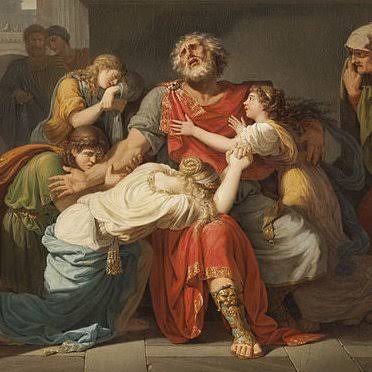
There is a book that reads like yesterday’s news in our districts, yet it was written in 429 BC. It is called Oedipus Rex, by Sophocles.
Sophocles (497-406) was a Greek playwright from Athens-considered one of the three great tragedians of ancient Greece, alongside Aeschylus and Euripides. According to antiquities, Sophocles lived 90 years in a time when most people died at 40.
Sophocles wrote it in Athens, which still exists today as the capital of Greece. Modern Athens sits about eight kilometers from the sea, with about three and a half million people in its metro area.
It is not itself a port, but its port is called Piraeus, which is now part of greater Athens. Today it is crowded and commercial, full of universities, apartments and tourists going to see the Acropolis, and it is the political center of Greece just like Kampala is for Uganda.
Ancient Athens in 429 BC was different. It was not just a commercial town like Mombasa. It was a city-state, an independent country built around one city, with its own army, laws and gods. Its power came from the sea. It had three hundred warships called triremes, each rowed by one hundred and seventy men, and controlled Piraeus, through which it imported grain from the Black Sea and exported olive oil, wine and silver from the mines of Laurion.
It was also the first democracy, where free male citizens gathered on a hill called Pnyx and voted directly by raising hands on war, taxes and peace treaties. It was also the Hollywood and university of antiquity, with playwrights like Sophocles, Euripides and Aeschylus competing in festivals, philosophers like Socrates asking questions in the market, and sculptors like Phidias carving the gods.
At that time Athens was dying. It was in the second year of a brutal twenty-seven-year war against Sparta, and a plague had entered through Piraeus and killed one third of its people, including its greatest leader Pericles who had made Athens golden.
Sophocles, who was not only a playwright but also a general, priest, treasurer and ambassador who lived to ninety years, wrote Oedipus Rex about a city hit by plague searching for a killer, because he was describing his own city and his own people dying and looking for someone to blame.
Where The Curse Really Begins.
The curse in the book does not start with Oedipus. It starts with his father King Laius, and this matters because curses in Sophocles never fall from nowhere. They come from a broken trust.
While hosted by his friend King Pelops, Laius betrayed sacred hospitality. Pelops had a young son Chrysippus entrusted to him for education and care. Laius abducted the boy and sexually abused him. In Greek culture, hospitality called Xenia was sacred, protected by Zeus himself.
A guest who violates the child of his host commits the worst betrayal, worse than theft or murder. The boy died by suicide out of shame. Pelops cursed Laius: you shall never have a son, and if you do, that son shall kill you and destroy your house.
Sophocles does not act this scene on stage. Every Athenian knew it from the wider myths told by Apollodorus and others. He starts with the curse already in place.
Who Was Jocasta Before Marriage?
Before she married Laius, Jocasta was already royalty in Thebes. She was daughter of Menoceus, a descendant of Cadmus who founded Thebes by sowing dragon’s teeth. She was sister of Creon, the man who becomes king after both Laius and later Oedipus fall. She was a Theban princess — in some versions called Epicasta.
Laius himself was partly an outsider who had returned from exile to claim the throne. Marrying Jocasta, the true princess of the bloodline, gave him legitimacy. The throne passed through her blood. That is why later, whoever married Jocasta automatically became king.
The Oracle and The Pierced Feet.
Laius later married Jocasta and the Oracle of Delphi warned him that any son born to them would kill him and marry his mother. Delphi was not a person but the most sacred shrine in Greece, high on Mount Parnassus, where a priestess called Pythia spoke for Apollo, serving as Supreme Court, church and intelligence combined.
To outwit fate, when a son was finally born, Laius pierced his newborn’s ankles with an iron pin, tied them together, and ordered a shepherd to leave him on Mount Cithaeron to die. That is why the child was called Oedipus, meaning swollen foot. The shepherd pitied the baby and handed him to a shepherd from Corinth, who took him to the King and Queen of Corinth, Polybus and Merope, who were childless. They raised him as their own prince.
The Royal Convoy at The Narrow Crossroads.
Years later at a drinking party in Corinth, a drunk man shouted that Oedipus was not his father’s son, that he was a bastard. And here is the humour of life that Sophocles hides in wine: it is often the drunk in the pub called Jegeje or TeraMot or Mango Tree Bar, or at The Bourbon Jinja who tells the painful truth nobody dares to say sober.
We laugh at him, we call him a dimwit, we say he is too drunk to know what he is talking about, and we chase him out of the bar. Yet the next morning, while sober men are still pretending, the drunk’s words are still ringing true in our chest. In Uganda we know this man.
He is the one at the trading center at 11pm with one bottle who says, that CAO or the Town Clerk is a thief, or the other DPC or CID is corrupt and everyone says sheepishly shhhhhh, leave that drunkard. But six months later, the Auditor General (AG) says exactly the same thing in polished English.
Oedipus was troubled by that drunk man’s joke. He went to ask his parents, and they denied it, but the words had already entered his heart like a thorn. So, he went to Delphi to ask who his real parents were. The Oracle did not answer that, but gave him a new prophecy: you will kill your father and marry your mother.
To save Polybus and Merope whom he loved, he fled towards Thebes, not knowing he was running towards his real parents.
On the road at Phocis, where three roads meet, he met what we in Uganda would comfortably call a royal convoy. Laius was not walking alone. He was in a chariot, the V8 of that time, with horses and armed escorts more numerous than teachers in our schools and nurses in our hospitals, and a herald shouting clear the road.
Oedipus was on foot with only a staff, like a boda-boda rider. The place was narrow, like our murram district feeder roads where two vehicles cannot pass. The convoy refused to give way, the herald whipped Oedipus, and Laius himself struck him on the head with his horse-goad.
Oedipus, young and angry, pulled the big man from the chariot and probably using a paver or sword killed him together with his escorts. Only one servant ran into the bush and later lied that many robbers had killed the king, because to say one youth on foot had killed a royal convoy would be too shameful.
The Monster That Blocked the City.
Outside Thebes, a monster had blocked the seven gates. It was the Sphinx, with head of a woman, body of a lion, wings of an eagle and tail of a serpent. She was sent to punish Thebes for Laius’ old crime that had never been cleansed.
She asked every traveler a riddle: what walks on four legs in the morning, two legs at noon, and three legs in the evening? Those who failed, she strangled and devoured. Oedipus answered, man, who crawls on four as a baby, walks on two as a man, and walks on three with a staff as an old man. Defeated, the Sphinx threw herself from the rock and died, and Thebes was saved but left kingless.
Uganda Now Has Its Own Sphinx.
In Sophocles’ Oedipus Rex, Thebes could not move forward because a monster called the Sphinx blocked its seven gates-half-woman, half lion with wings of an eagle and tail of a serpent, she strangled every traveler who failed her riddle.
Uganda has its own Sphinx. It does not sit on a rock, it sits on our district headquarters, city halls, our schools and our hospitals. It is bribery and corruption, abuse of office, nepotism and poor service delivery that we have since normalized.
At the district or council gate, it appears as inflated BoQs where shoddy work costs more than quality. At the school gate as absenteeism where public servants give two days to government and five to private businesses. At the hospital or health centers as stolen drugs and mothers delivering on bare floors. At the job gate with District/City Service Commission as sale of government jobs that locks out qualified youth.
Like the Sphinx, it asks the same riddle every day: will you bribe or will you perish? No road, no classroom, no hospital or PDM fund can pass until this monster is answered.
How He Ended Up Marrying His Mother.
The elders needed a king immediately. They offered Oedipus the throne, and with the throne came the widowed queen Jocasta who held it. This was how he married his mother, not out of lust but out of politics.
Jocasta was perhaps thirty-five to forty, still in her prime, while Oedipus was twenty-five, handsome and celebrated as a god. No one suspected because the baby was supposed to be dead, pierced and left on a mountain twenty years earlier.
Oedipus came with a Corinthian name and accent, and Thebes had no photographs or National IDs or DNA test results. A queen who saw her baby for one day could not recognize him after twenty years as a grown man.
So, he sat where Laius sat, wore what Laius wore, and slept where Laius slept. They lived together for many years and had four children, Eteocles, Polynices, Antigone and Ismene, and Jocasta was happy because she thought the oracle had failed.
How The Secret Was Finally Smoked Out.
Soon plague hit Thebes again, and the Oracle said the city would heal only when the killer of Laius was found. Oedipus vowed to find him, not knowing he was hunting himself.
The truth came through two shepherds. One was the Corinthian who had given baby Oedipus to Polybus. The other was the Theban who was ordered to kill the baby but pitied him, and who had also survived the crossroads.
When the second shepherd was forced to speak, Jocasta understood first, because she recognized the pierced ankles, she herself had ordered. The scar she made to kill him became the mark that identified him. She shouted, for god’s sake if you love your life, do not search further. Oedipus pushed on, until the shepherd confessed.
Jocasta ran inside and hanged herself with her dress cords. Oedipus found her and blinded himself with her brooches, because eyes that did not see what was in front of them did not deserve to see again.
Our Own Lango Oracle.
Among the Lango where I belong, elders captured this whole tragedy in one proverb. Pe iyu, gweng iyi cuk. Never throw a stone in a market place, because you can hit your mother or father who has come to meet a friend, even if you have built a supermarket for your parents at home. Sophocles needed fifteen hundred lines to say it. The Lango said it in six words.
From Athens To Uganda: The Fever Called Balaamism.
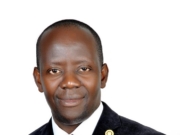
That brings us from Athens to Uganda. Hon. Balaam Barugahare Ateenyi, born 1979 in Sembabule, is a businessman, music promoter and events organizer who rose from concerts to national leadership, formerly State Minister for Children and Youth Affairs in the Ministry of Gender, Labour and Social Development Affairs and now Minister for Local Government, the ministry directly responsible for districts, roads, schools and hospitals where service delivery has collapsed.
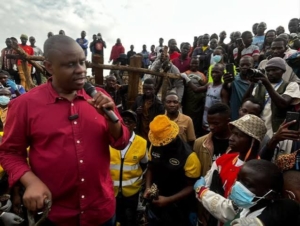
He does not come with polished English of boardrooms. He comes with a microphone, cameras and a ragtag approach that does not write reports in Lunyonyo but names names in the market in the district squares. What we call Balaamism is the fever he has caused.
Every civil servant now fears the name Balaam, hairs stand, Heads of Department hold their breath, some forge excuses and hide, some switch off phones. He has exposed what we normalized for decades, that bribery and corruption, abuse of office, nepotism and poor delivery became our new normal.
We who receive monthly salaries from taxpayers’ money but give only two days a week to government, while the rest goes to personal projects. Roads, schools and hospitals are shoddy with inflated Bills of Quantities because money is shared among a few.
No wonder we have rentals everywhere, farms and posh cars changed four times a year, while poor wanainchi bow and worship us in front seats of churches and mosques.
In one district, we connived and broke our own office at night, removed incriminating documents, changed locks and appeared next morning as angels from heaven to welcome Hon Balaam with juice and millet porridge. Whispers came, a sniffer dog was sought, and the innocent-looking angels were smoked out and confessed. That is just one district, but such behavior is everywhere.
Thankfully, The Law Is Now Following the Microphone.
For long the worry was that this approach would remain crude, only shaming on camera without legal consequence. Thankfully, that gap is now being closed.
The Minister of Justice and Constitutional Affairs, Hon. Nobert Mao, has assured Balaam that very soon there will be a magistrate and a prosecutor attached to these operations, adding that mobile courts will be constituted right at site, with all stakeholders present including prison officials, police, and suspects being arraigned and remanded on the spot.
This changes everything. Day one becomes shame, file, charge and remand in the same market or square where the stone was thrown.
And Are Some Ugandans Not Doing the Same?
Now the old book stops being Greek and becomes Ugandan. If Laius abused the son of his host and brought a curse on Thebes, are some Ugandans not doing the same to sons and daughters of fellow citizens?
Some do the same thing in the literal sense. They are guests in other people’s trust. A teacher is a guest entrusted with a pupil, a boss with an intern, an uncle with a niece, a pastor with a choir girl, a senior officer with a junior. When they abuse that trust and abuse the child, they repeat Laius. They plant a curse that will not end with them.
Others abuse differently, but the result is the same. They abuse by stealing the future of Ugandan children. When you inflate a school Bill of Quantities and build a classroom that collapses after one term, you have abused the sons and daughters of that village.
When you steal drugs from the health center and a child dies of malaria that could have been treated, you have abused that child. When you sell jobs and keep a qualified teacher at home because she has no money, you have abused the children she was supposed to teach.
Both are abuse of a child placed under your protection. One is with the body, the other is with the future. Both bring a curse on the house.
Can Ugandans Learn from The Book?
Yes. And many Ugandan students who are now senior adults could have read or studied this book while they did Literature in English in secondary school, while teachers who majored in English double also encountered the same in their teacher education studies at university.
Yet like Thebes, we read it as a story for exams and forgot its warning. If you have not read Oedipus Rex, look for it again. It is only about sixty pages. You can find it in any university library, on free PDF online, or in abridged form in literature textbooks for A-Level. Read it this time not as a Greek story to pass, but as a mirror for our districts.
It teaches us about origins, because what you plant at origin follows you. If Laius had not abused Chrysippus, there would be no curse. It teaches us about crossroads, because restraint at crossroads saves a nation. If Laius had let the youth pass, murder would not happen.
It teaches us about early warnings, because the blind prophet Tiresias warned Oedipus early and was called a fool. We had Auditor General reports, internal audit reports and wanainchi whispers, and we called them noise.
The book also teaches us about truth, because Thebes was not healed by reports but by facing itself. As James Baldwin wrote, not everything that is faced can be changed, but nothing can be changed until it is faced.
There is also the lesson of Nathan and King David in 2 Samuel Chapter 12, where David took Bathsheba and killed Uriah in secret, thinking no one saw. Prophet Nathan came with a parable of a rich man who stole a poor man’s only lamb. David said that man must die, and Nathan said, you are the man. David said, I have sinned. That is the same confession Oedipus made.
Hon Balaam as Local Government Minister is now Nathan with government seal, and with Mao’s assurance of mobile courts with magistrate, prosecutor, prison and police at site, he is now Nathan with both microphone and magistrate.

Thebes was healed only when Oedipus said I am the Man. Uganda will heal when we stop throwing stones in our own market and understand that the market is our home, wanainchi are our mothers and fathers, and every shilling stolen, and every child abused, is a stone that will surely hit our own blood.